
The cheese on a burger affects far more than appearance. It changes the flavour, creaminess, saltiness and texture of every bite—and some cheeses melt much more smoothly than others.
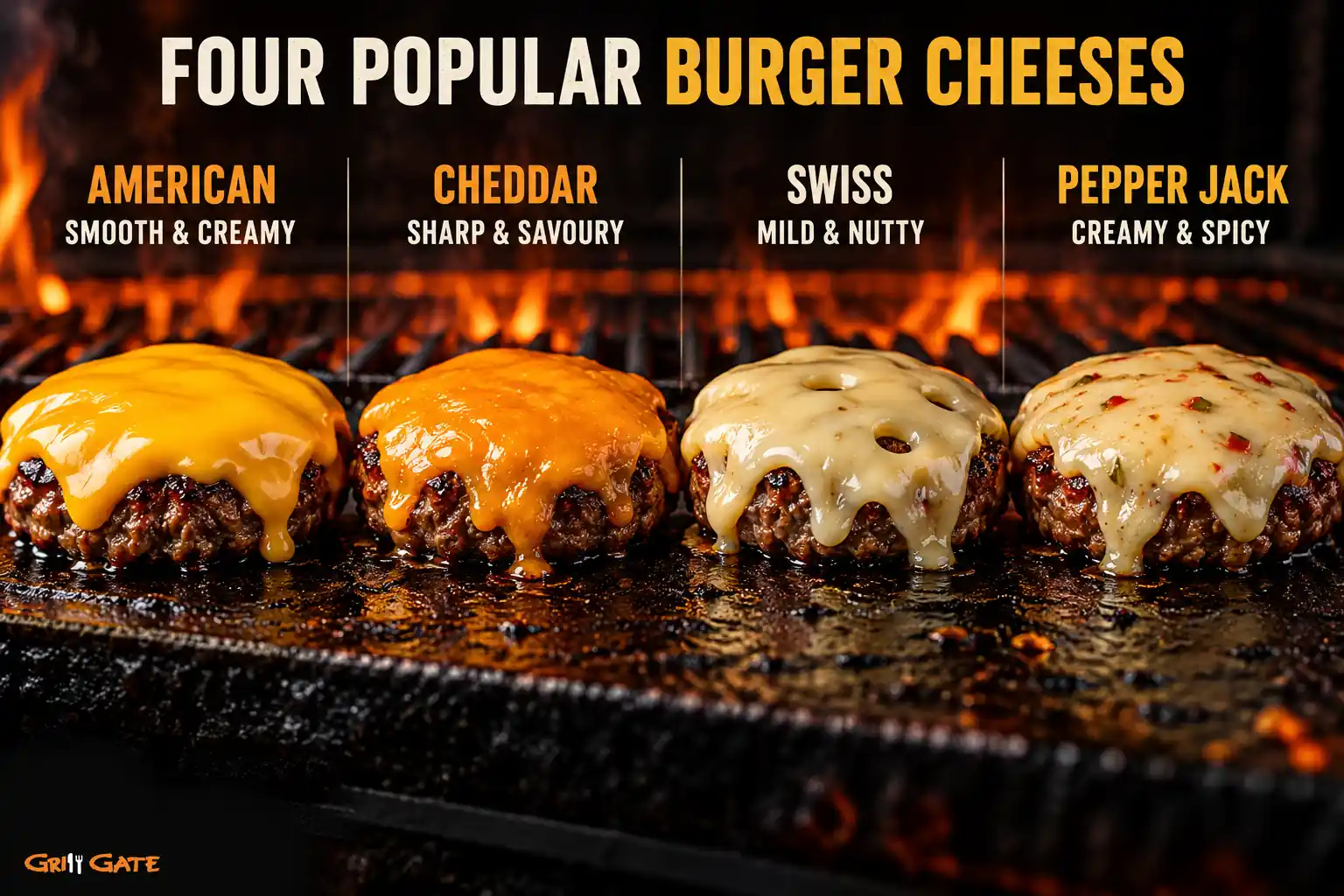
American cheese offers the smoothest melt, cheddar delivers a sharper flavour, Swiss adds mild nuttiness, mozzarella creates stretch, and pepper jack brings heat.
The best burger cheese depends on the patty, toppings, sauce and bun. This guide compares the most popular options so you can choose a cheese that supports the burger rather than covering up its flavour.
If you are comparing complete burger styles, begin with our guide to the different types of burgers.
Burger Cheese Types at a Glance
| Cheese | Flavour | Meltability | Best Burger Pairing |
|---|---|---|---|
| American | Mild, creamy and salty | Excellent | Classic and thin-patty cheeseburgers |
| Cheddar | Tangy, savoury and sometimes sharp | Good | Thick gourmet burgers |
| Swiss | Mild, nutty and slightly sweet | Very good | Mushroom and onion burgers |
| Mozzarella | Mild and milky | Very good | Loaded burgers and Italian-inspired toppings |
| Pepper Jack | Creamy and spicy | Very good | Spicy burgers |
| Provolone | Mild, savoury and slightly sharp | Very good | Mushroom, onion and beef-heavy burgers |
| Gouda | Creamy, nutty or smoky | Good | Bacon and barbecue burgers |
| Blue Cheese | Salty, sharp and tangy | Moderate | Bold gourmet burgers |
| Brie | Buttery, earthy and creamy | Good | Premium burgers with sweet or savoury toppings |
What Makes a Cheese Good for Burgers?
A good burger cheese needs the right balance of flavour and meltability.
The cheese should soften over the hot patty, cover enough of its surface and remain creamy when the burger reaches the table. It should also complement the beef, sauce and toppings rather than making the entire burger taste only of cheese.
Four factors matter most:
- Moisture: Younger, more moist cheeses generally melt more smoothly.
- Fat: Fat contributes to richness and a creamy mouthfeel.
- Age: Aging creates stronger flavour but can make cheese less predictable when melted.
- Thickness: A thick slice may not melt completely before the patty is ready.
Serious Eats summarizes the science of meltability this way:
“Your most reliable melting cheeses will be young, moist, rennet-set cheeses that are easily sliced at room temperature.”
The source explains that moisture, fat and protein structure determine whether cheese melts smoothly or separates into oily and firm components. Read The Science of Melting Cheese.
American Cheese: The Smoothest-Melting Choice
American cheese is designed to melt evenly without easily separating. Its mild flavour, creamy texture and dependable performance have made it one of the most familiar cheeseburger cheeses.
It works especially well when the burger is built around:
- Thin or crispy patties
- Multiple stacked patties
- Pickles and raw or grilled onions
- Ketchup, mustard or burger sauce
- A soft potato or sesame bun
Because American cheese melts quickly, it can wrap around the patty and enter its irregular edges. This makes it particularly effective on smash-style burgers and double cheeseburgers.
What does American cheese taste like?
American cheese is mild, creamy and slightly salty. It does not have the sharp flavour of aged cheddar or the nuttiness of Swiss, which allows the browned beef and toppings to remain noticeable.
Is American cheese the same as cheddar?
No. American cheese is commonly produced using one or more cheeses—often cheddar or Colby—combined with additional ingredients that help it melt consistently. Cheddar is a distinct natural cheese with a firmer texture and more pronounced flavour.
If you want a smooth melt and classic burger profile, choose American. If you want the cheese flavour to be more prominent, choose cheddar.
Cheddar: The Beef-Forward Classic
Cheddar is one of the most versatile cheeses for burgers. Depending on its age, it can range from mild and creamy to sharp, tangy and complex.
Mild or medium cheddar generally melts more evenly than extra-aged cheddar. Sharp cheddar provides more flavour, but it may become oily or resist melting smoothly when exposed to excessive heat.
Cheddar works well with:
- Thick beef patties
- Bacon
- Caramelized onions
- Barbecue sauce
- Mushrooms
- Pickles
- Brioche or sesame buns
The strong beef presence of a thick patty can support a more flavourful cheese. Our guide to thick vs thin burger patties explains how patty thickness changes the balance of the complete burger.
Mild or sharp cheddar for burgers?
Choose mild or medium cheddar when you want a creamier melt and balanced flavour.
Choose sharp cheddar when you want a more noticeable tang and are using a substantial patty with bold toppings. Thinly slicing sharp cheddar helps it soften before the beef overcooks.
Swiss Cheese: Mild, Nutty and Ideal with Mushrooms
Swiss cheese is known for its mild, slightly sweet and nutty flavour. It melts well and becomes soft and creamy without overwhelming the beef.
Its flavour naturally complements earthy and savoury ingredients, including:
- Sautéed mushrooms
- Caramelized onions
- Grilled onions
- Mustard
- Bacon
- Thick grilled patties
A mushroom and Swiss burger is a classic combination because the cheese supports the mushrooms without adding excessive sharpness or saltiness.
Swiss is a particularly good choice for diners who want more character than American cheese but less intensity than sharp cheddar or blue cheese.
Mozzarella: Mild Flavour and Plenty of Stretch
Mozzarella provides a mild, milky flavour and a stretchy texture. It melts well, but its subtle taste means it often needs flavourful toppings or a second cheese to create a more complete burger.
Mozzarella pairs well with:
- Tomato-based toppings
- Eggplant
- Mushrooms
- Pesto
- Parmesan
- Grilled peppers
- Italian-inspired sauces
Low-moisture mozzarella is generally easier to manage on a burger than fresh mozzarella. Fresh mozzarella contains more water and may release moisture that softens the bun.
Mozzarella is useful when you want creaminess and stretch without adding a sharp or salty flavour.
Pepper Jack: The Choice for a Spicy Burger
Pepper Jack combines the creamy melt of Monterey Jack with peppers and spices. It provides heat without losing the soft texture expected from melted burger cheese.
It works especially well with:
- Jalapeños or grilled peppers
- Spicy burger sauce
- Avocado or guacamole
- Crispy onions
- Bacon
- Barbecue flavours
Pepper Jack can make a burger taste spicy without requiring a large quantity of hot sauce. However, combining it with too many spicy toppings may hide the flavour of the beef.
For a balanced spicy burger, pair Pepper Jack with a cooling ingredient such as avocado, a creamy sauce or fresh lettuce.
Provolone: A Savoury Alternative to Swiss
Provolone is smooth, savoury and slightly sharper than mozzarella. Younger provolone melts evenly and provides more flavour than mozzarella without becoming as dominant as aged cheddar.
Good pairings include:
- Mushrooms
- Grilled onions
- Peppers
- Beef-heavy burgers
- Garlic-based sauces
- Italian-style toppings
Provolone is a useful middle ground when you want a creamy melt and noticeable savoury flavour but do not want the sweetness of American cheese or the tang of cheddar.
Gouda: Rich, Nutty and Sometimes Smoky
Young Gouda has a creamy, mild and slightly sweet flavour. Smoked Gouda introduces a deeper smoky character that pairs especially well with grilled beef.
Gouda works with:
- Bacon
- Barbecue sauce
- Caramelized onions
- Mushrooms
- Crispy onions
- Thick gourmet patties
Young Gouda generally melts better than a heavily aged variety. Aged Gouda can have an excellent caramel-like flavour, but its lower moisture makes it less suitable when a smooth cheese layer is the goal.
Use smoked Gouda carefully. When combined with bacon, smoky sauce and charred beef, the burger can become too smoke-heavy.
Blue Cheese: Bold, Salty and Tangy
Blue cheese has one of the strongest flavours used on burgers. It is salty, sharp and tangy, so a small amount can change the entire character of the sandwich.
It pairs well with:
- Thick beef patties
- Bacon
- Caramelized onions
- Mushrooms
- Sweet onion jam
- Barbecue sauce
Rather than forming a completely smooth layer, blue cheese often softens and crumbles across the hot patty.
This is not the best option for a subtle or classic cheeseburger. It is better suited to a gourmet burger where the strong cheese flavour is intentional.
Brie: Buttery and Creamy
Brie becomes very soft when warmed and adds a buttery, earthy flavour. It is most successful on premium-style burgers with carefully selected toppings.
Common pairings include:
- Caramelized onions
- Mushrooms
- Bacon
- Fig or onion jam
- Arugula
- Brioche buns
Because Brie is rich, it should be used with restraint. Combining it with a heavy patty, rich sauce and several fatty toppings can make the burger feel unbalanced.
Which Cheese Melts Best on a Burger?
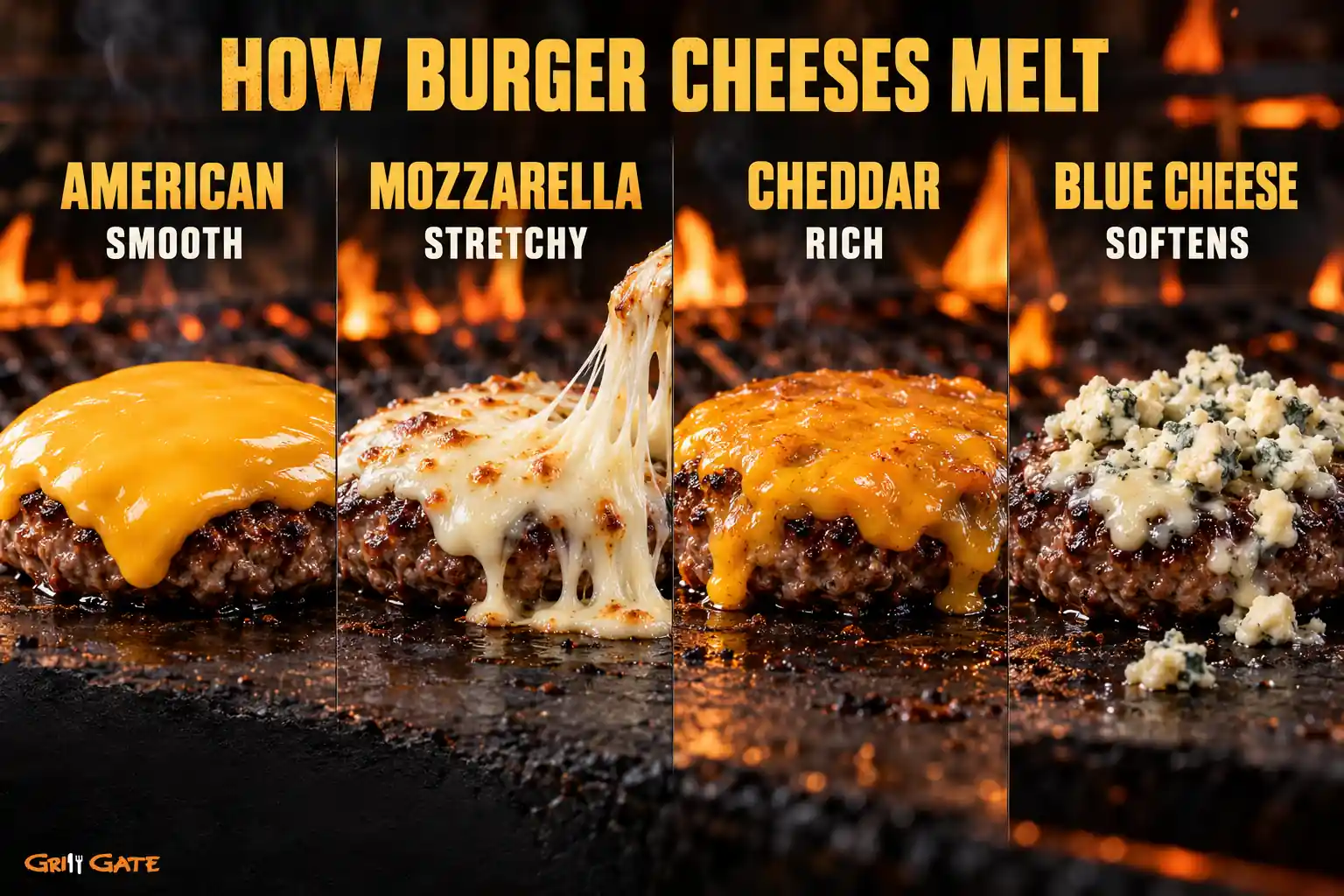
American cheese provides the most consistent and even melt. Pepper Jack, Monterey Jack, young Swiss, mozzarella and provolone are also strong melting options.
Cheddar and Gouda melt well when they are relatively young and thinly sliced. Extra-aged cheeses contain less moisture and may release oil or soften unevenly.
A practical meltability ranking is:
- American cheese
- Monterey or Pepper Jack
- Young Swiss
- Mozzarella
- Provolone
- Mild or medium cheddar
- Young Gouda
- Aged cheddar or aged Gouda
- Blue cheese
This ranking describes melting consistency, not overall flavour. A cheese with a less uniform melt may still be the best choice for a particular burger.
Which Cheese Works Best with Thick and Thin Patties?
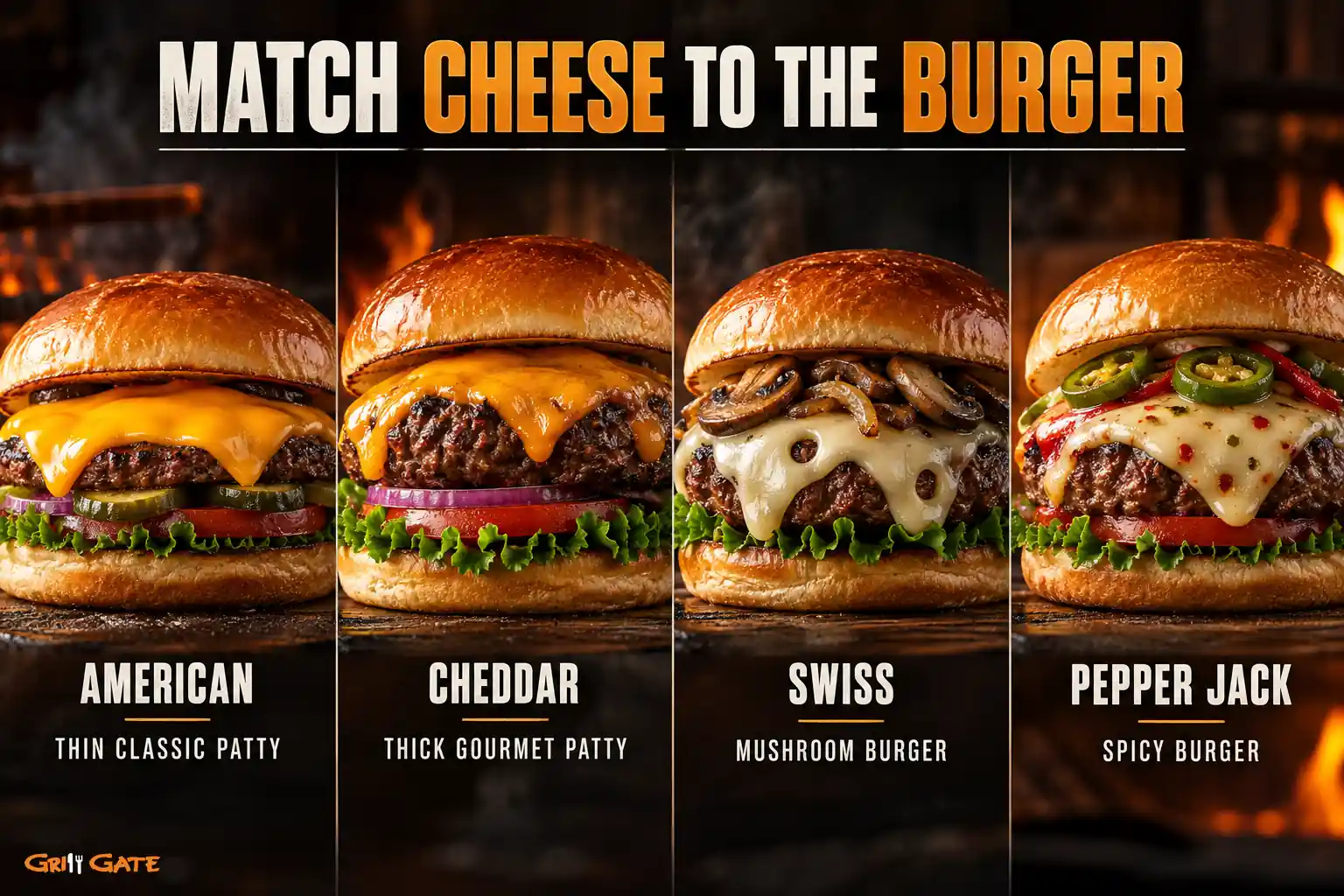
Best cheese for thin patties
Thin patties cook quickly and provide plenty of browned surface. They work best with cheese that melts rapidly:
- American
- Pepper Jack
- Young Swiss
- Provolone
American cheese is especially effective on stacked thin patties because it creates a creamy layer between the crispy beef.
Best cheese for thick patties
A thick patty stays on the heat longer and offers a substantial beef flavour that can balance stronger cheeses:
- Cheddar
- Swiss
- Gouda
- Blue cheese
- Brie
An 8 oz gourmet burger can support more assertive cheese and substantial toppings without allowing either to dominate the beef.
How the Bun Changes Your Cheese Choice
The bun should also be considered when choosing burger cheese.
- Brioche and cheddar: Rich, slightly sweet bread balances tangy cheese.
- Potato bun and American cheese: Both provide a soft, classic burger texture.
- Sesame bun and Swiss: A neutral bun allows the nutty cheese to remain noticeable.
- Brioche and Brie: A premium but very rich combination that needs restrained toppings.
- Potato bun and Pepper Jack: Soft bread balances spicy cheese and crispy beef.
Our guide to brioche, potato and sesame burger buns explains how bun flavour and structure affect the complete burger.
Can You Combine Two Cheeses on a Burger?
Yes. Combining cheeses can produce a better balance of flavour and meltability than relying on one cheese alone.
Useful combinations include:
- American and cheddar: Smooth melting with a sharper cheese flavour
- Mozzarella and Parmesan: Stretch plus a salty, savoury finish
- Swiss and provolone: Mild nuttiness with a creamy melt
- Cheddar and Pepper Jack: Tanginess with moderate heat
- Gouda and mozzarella: Smoky flavour with improved stretch
Two cheeses should have different roles. One can provide meltability while the other provides flavour. Using several strong cheeses together can make the burger excessively salty and hide the beef.
When Should Cheese Be Added to a Burger?
Add the cheese near the end of cooking, once the patty is almost ready.
Place the slice directly on the hot patty and allow enough time for it to soften. Covering the cooking surface briefly can trap heat and help thicker cheeses melt without requiring the beef to cook much longer.
Avoid adding cheese too early. Prolonged heat may cause natural cheese to release oil, become tough or slide away from the patty.
The slice should also be close to the size of the patty. A very small slice leaves much of the burger uncovered, while excessive overhang can melt directly onto the grill.
How to Choose the Right Burger Cheese
Use this simple guide:
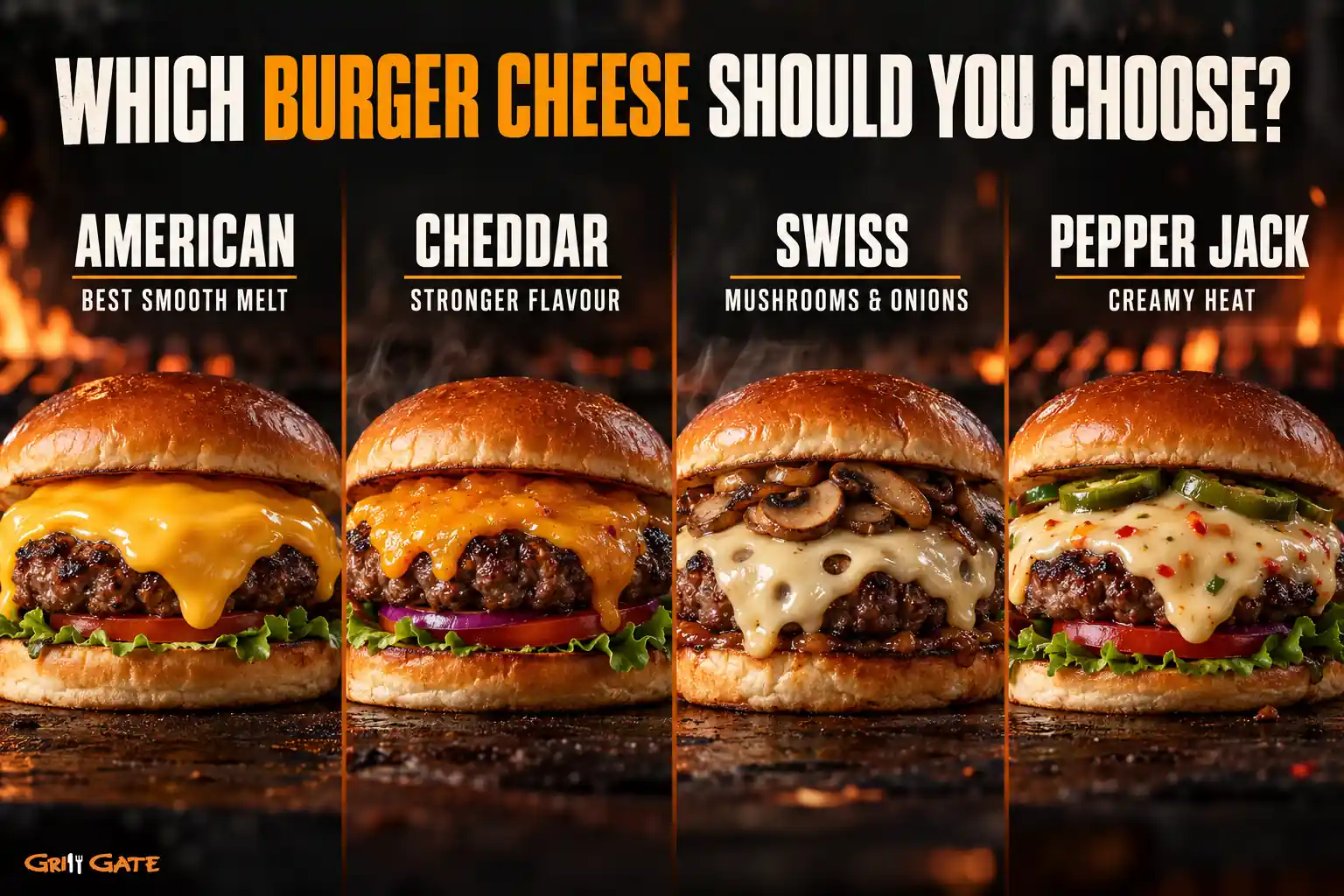
- Choose American for the smoothest melt and a classic cheeseburger.
- Choose cheddar for a stronger, beef-forward flavour.
- Choose Swiss for mushrooms and grilled onions.
- Choose mozzarella for stretch and mild creaminess.
- Choose Pepper Jack for heat.
- Choose provolone for smooth savoury flavour.
- Choose Gouda for rich or smoky burgers.
- Choose blue cheese for a bold gourmet build.
- Choose Brie for a buttery premium burger.
The best cheese is not automatically the strongest or most expensive. It is the cheese that balances the patty, bun, sauce and toppings.
The Grill Gate Approach to Cheeseburger Balance
At Grill Gate, cheese is part of the complete burger rather than an isolated topping. A substantial beef patty can support creamy and flavourful cheeses, but the quantity and combination still need balance.
Cheese should soften over the beef, complement the toppings and remain noticeable without covering the grilled flavour of the patty.
The addition of cheese is also the central distinction between a hamburger and cheeseburger. Read our guide to hamburgers vs cheeseburgers for a closer comparison.
You can explore Grill Gate’s gourmet cheeseburger experience at our locations in:
Final Verdict
American, cheddar and Swiss remain popular burger cheeses because each solves a different need.
American cheese provides the smoothest and most reliable melt. Cheddar offers a stronger, tangier flavour that stands up to thick beef patties. Swiss brings mild nuttiness and pairs naturally with mushrooms and onions.
Mozzarella, Pepper Jack, provolone, Gouda, blue cheese and Brie offer additional options for burgers built around stretch, heat, smoke or bold gourmet flavours.
Choose the cheese based on the complete burger—not the cheese alone.
FRESH OFF THE GRILL
Craving Grill Gate?
Order your favourite burgers, Philly cheesesteaks, pizza and more online from Grill Gate.
Frequently Asked Questions
What is the best cheese for a burger?
American cheese is best for a smooth classic melt, while cheddar is better when you want a stronger cheese flavour. The ideal choice depends on the patty and toppings.
What cheese melts best on burgers?
American cheese provides the most reliable melt. Pepper Jack, Monterey Jack, young Swiss, mozzarella and provolone also melt well.
Is cheddar or American cheese better for burgers?
American cheese melts more smoothly, while cheddar has a stronger and sharper flavour. American suits thin classic patties; cheddar pairs especially well with thick gourmet burgers.
What cheese goes best with a mushroom burger?
Swiss is the classic choice because its mild nuttiness complements mushrooms. Provolone, mozzarella and Gouda are also suitable alternatives.
What cheese is best for a spicy burger?
Pepper Jack is an effective choice because it combines a creamy melt with pepper heat. Cheddar can also work with jalapeños or spicy sauce.
Can you put two types of cheese on a burger?
Yes. Combining a strong-flavoured cheese with a smooth-melting cheese can improve balance. American with cheddar and mozzarella with Parmesan are useful examples.
When should cheese be added to a burger patty?
Add it near the end of cooking when the patty is almost ready. This gives the cheese enough time to soften without overcooking the beef.