
The bun is not just a convenient way to hold a burger together. Its sweetness, softness, structure and surface texture can change how the beef, cheese, toppings and sauce taste in every bite.
Among the most common burger bun types, brioche buns are rich and slightly sweet, potato buns are soft and moist, and sesame buns offer a familiar flavour with a little extra texture.
The best choice depends on the burger. A heavy gourmet build needs a bun with enough structure, while a thin crispy patty often works better with something softer and less dominant.
For a broader look at how patties, cooking methods and toppings create different styles, explore our guide to the different types of burgers.
Brioche vs Potato vs Sesame Buns at a Glance
| Feature | Brioche Bun | Potato Bun | Sesame Bun |
|---|---|---|---|
| Flavour | Rich, buttery and slightly sweet | Mild, subtly savoury and slightly sweet | Neutral with a light nutty flavour |
| Texture | Tender and fluffy | Very soft, moist and flexible | Soft to moderately firm |
| Structure | Medium to strong | Soft but resilient | Depends on the base dough |
| Best feature | Rich flavour | Moisture and flexibility | Familiar taste and versatility |
| Best with | Gourmet and savoury burgers | Thin, crispy or saucy burgers | Classic hamburgers and cheeseburgers |
| Possible drawback | Can overpower delicate fillings | May compress under very heavy toppings | Seeds can fall off and the bun quality varies |
| Toasting | Light toasting recommended | Usually needs only gentle toasting | Works well toasted |
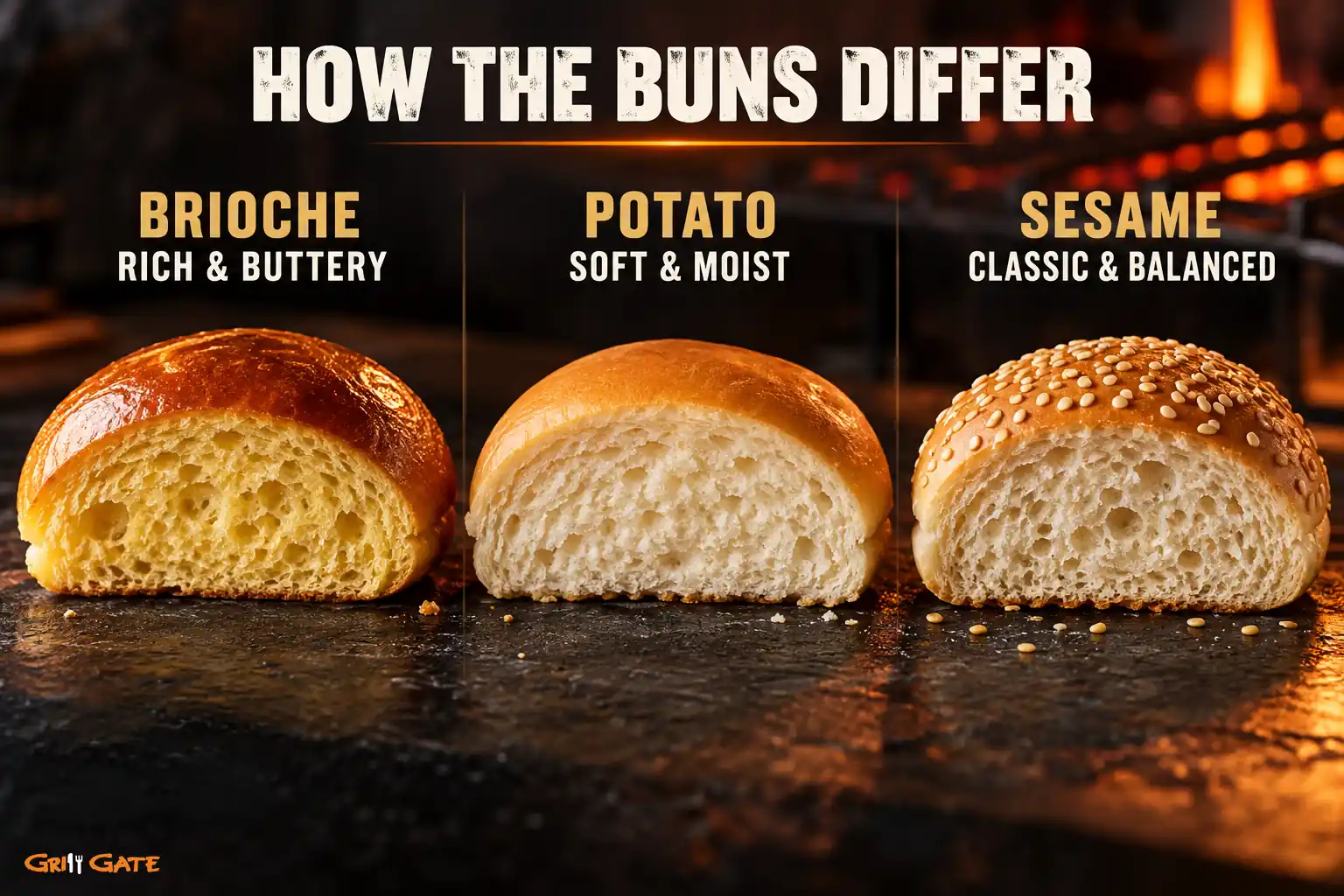
What Makes a Good Burger Bun?
A good burger bun should improve the sandwich without competing with it. It needs to be soft enough to bite through easily but strong enough to hold the patty, cheese, sauce and toppings.
The best burger buns usually provide four things:
- Structure: The bun should not split or collapse before the burger is finished.
- Softness: A tough bun can push the fillings out when you take a bite.
- Moisture control: The interior should handle meat juices and sauce without becoming immediately soggy.
- Balanced flavour: The bun should support the beef and toppings rather than dominate them.
Bigger is not always better. An oversized bun can dilute the flavour of the patty, while a bun that is too small may create a messy and unbalanced burger.
What Is a Brioche Burger Bun?
Brioche is a French-style enriched bread traditionally made with ingredients such as butter and eggs. These additions create a tender crumb, rich flavour and soft texture.
A brioche burger bun is usually recognizable by its:
- Glossy golden surface
- Soft, fine-textured interior
- Buttery aroma
- Slight sweetness
- Richer flavour than a standard white bun
The sweetness works especially well with salty beef, melted cheese, caramelized onions and smoky sauces. This contrast is one reason brioche has become common in gourmet burger restaurants.
When does brioche work best?
Brioche is a strong choice for:
- Thick gourmet patties
- Bacon cheeseburgers
- Mushroom burgers
- Burgers with caramelized onions
- Savoury toppings that benefit from a touch of sweetness
A substantial patty can balance the richness of the bread. Our comparison of thick vs thin burger patties explains why thicker patties deliver a more prominent, beef-forward bite.
What are the disadvantages of brioche?
Not every burger benefits from a brioche bun. A particularly sweet or buttery brioche can compete with the flavour of the beef. It may also make a burger feel excessively rich when combined with heavy sauces, multiple cheeses and fatty toppings.
For the best result, brioche should be lightly toasted. Toasting adds a thin protective layer that helps the bun resist moisture without making it hard.
What Is a Potato Burger Bun?
A potato bun contains potato in some form, such as potato flour, flakes or cooked potato. The added starch helps the bread hold moisture, creating a soft and flexible texture.
Potato buns generally have:
- A moist, tender crumb
- Mild flavour
- Excellent flexibility
- A soft surface
- Enough resilience to compress without immediately falling apart
King Arthur Baking describes the main benefit simply:
“Potato flour makes these buns soft and squishy.”
Its baking guidance also explains that potato increases liquid retention, helping bread remain soft and moist. Read the hamburger potato bun recipe and explanation.
When does a potato bun work best?
Potato buns are particularly well suited to:
- Thin burger patties
- Smash-style burgers
- Double cheeseburgers
- Burgers with pickles and onions
- Saucy burgers that need a flexible bun
Their softness allows the bun to wrap around the fillings, creating a compact burger that is easy to bite. This makes potato buns especially effective when the patty’s crispy edges should remain the main textural feature.
For more detail on how cooking style affects texture, see our comparison of grilled burgers and smash burgers.
What are the disadvantages of potato buns?
A very soft potato bun may compress too much beneath an unusually thick patty or a large quantity of wet toppings. Gentle toasting can improve its resistance to sauce, but excessive toasting removes some of the softness that makes it appealing.
What Is a Sesame Burger Bun?
A sesame bun is usually a classic white or lightly enriched burger bun topped with sesame seeds. Unlike brioche or potato buns, the name primarily describes the topping rather than one exact dough formula.
This means sesame buns can vary considerably. Some are light and fluffy, while others have a firmer crumb and more substantial structure.
Their common characteristics include:
- A familiar, classic burger appearance
- Mild bread flavour
- Light nuttiness from the sesame seeds
- Moderate structure
- Broad compatibility with different toppings
When does a sesame bun work best?
Sesame buns are a versatile choice for:
- Classic hamburgers
- Traditional cheeseburgers
- Lettuce, tomato, pickle and onion combinations
- Grilled burger patties
- Burgers where the toppings should remain familiar and balanced
Because the bread itself is usually neutral, the beef and toppings stay at the centre of the experience. This makes sesame buns suitable for both simple hamburgers and classic cheeseburgers.
If you are deciding between those two builds, read our guide to the difference between a hamburger and a cheeseburger.
What are the disadvantages of sesame buns?
The quality of a sesame bun depends heavily on its underlying dough. The seeds alone do not guarantee softness, flavour or durability.
Sesame seeds may also fall away during eating, but this is mainly a practical issue rather than a major difference in flavour.
Which Burger Bun Is the Softest?
Potato buns are generally the softest and most flexible of the three. Their moisture-retaining starch creates a tender crumb that compresses easily around the burger.
Brioche is also soft, but its texture usually feels richer and slightly more substantial because of the butter and eggs in the dough.
Sesame buns vary. A soft white sesame bun may be nearly as tender as a potato bun, while a denser version can be noticeably firmer.
For pure softness, choose potato. For softness combined with richness, choose brioche.
Which Burger Bun Handles Sauce Best?
The answer depends on both the dough and whether the bun is toasted.
A lightly toasted brioche bun can handle rich sauce and juicy toppings well because its enriched crumb has reasonable structure. A potato bun remains flexible but may absorb sauce more quickly when left completely untoasted.
A classic sesame bun can perform well if its crumb is sufficiently dense, but low-quality versions may become soggy or split.
Regardless of the bun type, sauce should complement the burger rather than saturate the bread. Applying very wet ingredients directly against an untoasted bottom bun increases the chance of sogginess.
Does the Bun Need to Be Toasted?
Most burger buns benefit from light toasting.
Toasting the cut surfaces:
- Adds a subtle crisp texture
- Improves flavour
- Creates a barrier against meat juices and sauce
- Helps prevent the bottom bun from becoming soggy
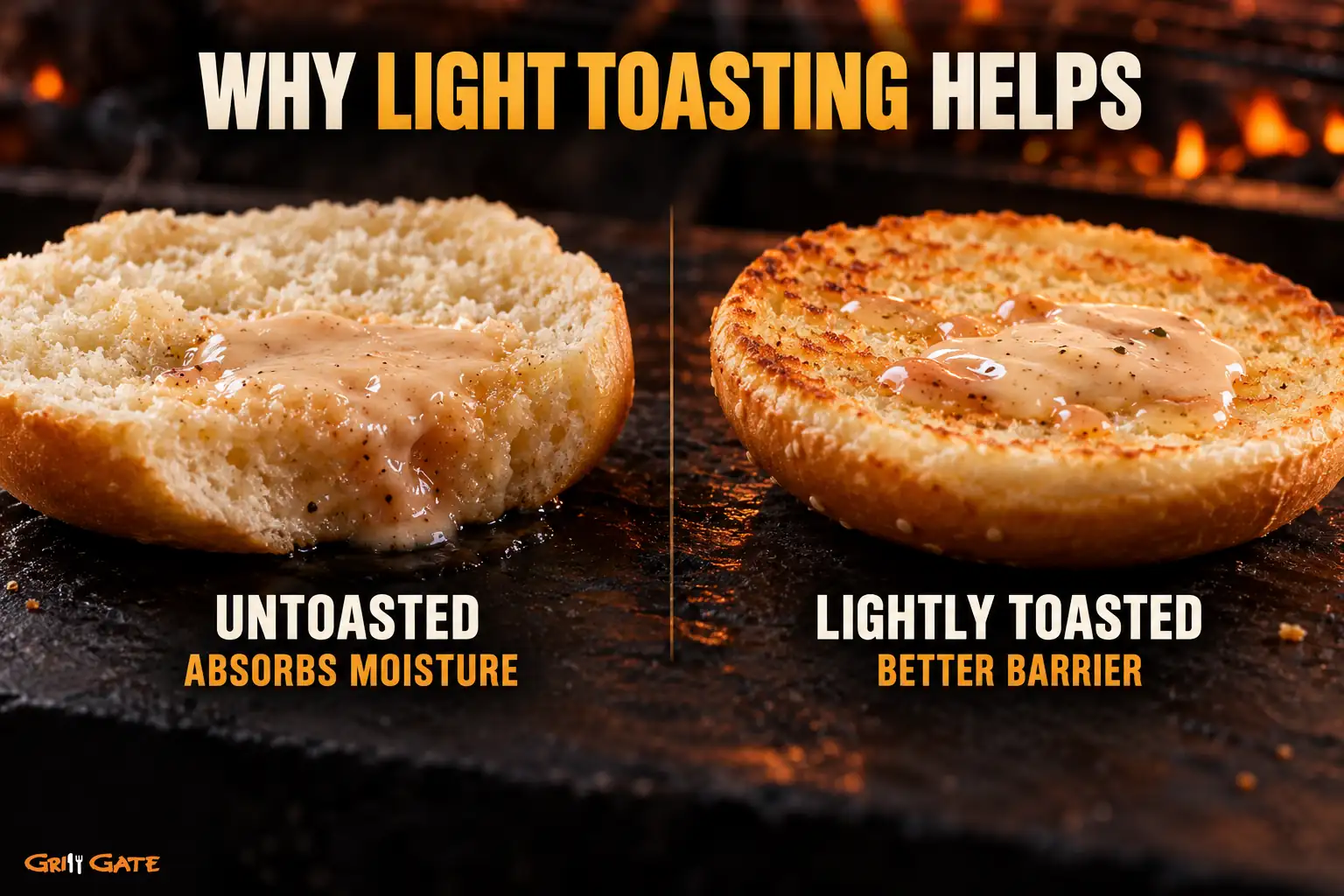
However, the bun should not become so crisp that it shatters or pushes the fillings out when bitten.
Brioche generally benefits from light toasting because its surface browns quickly. Potato buns require a gentle touch to preserve their softness. Sesame buns can usually tolerate slightly more toasting, depending on the density of the bread.
Which Bun Works Best with a Thick Burger Patty?
A thick patty needs a bun that can support its weight without overwhelming the meat.
Brioche is often a good match because it provides enough structure and richness for a gourmet build. A well-made sesame bun can also work, particularly when the goal is a more classic flavour.
For an 8 oz gourmet burger, the bun needs to balance a substantial quantity of beef as well as cheese, toppings and sauce. Learn more in our guide to what makes an 8 oz gourmet burger different.
A very delicate potato bun may compress under an especially heavy burger, although a properly sized and lightly toasted version can still work.
Which Bun Works Best with a Thin Burger Patty?
Potato buns are an excellent match for thin or smashed patties. Their soft texture allows the crispy beef, melted cheese, onions and pickles to remain prominent.
A sesame bun is another strong option for a classic thin-patty cheeseburger.
Brioche can work, but its sweetness and richness may overpower a single thin patty. If brioche is used, stacking two thin patties can create a better meat-to-bun balance.
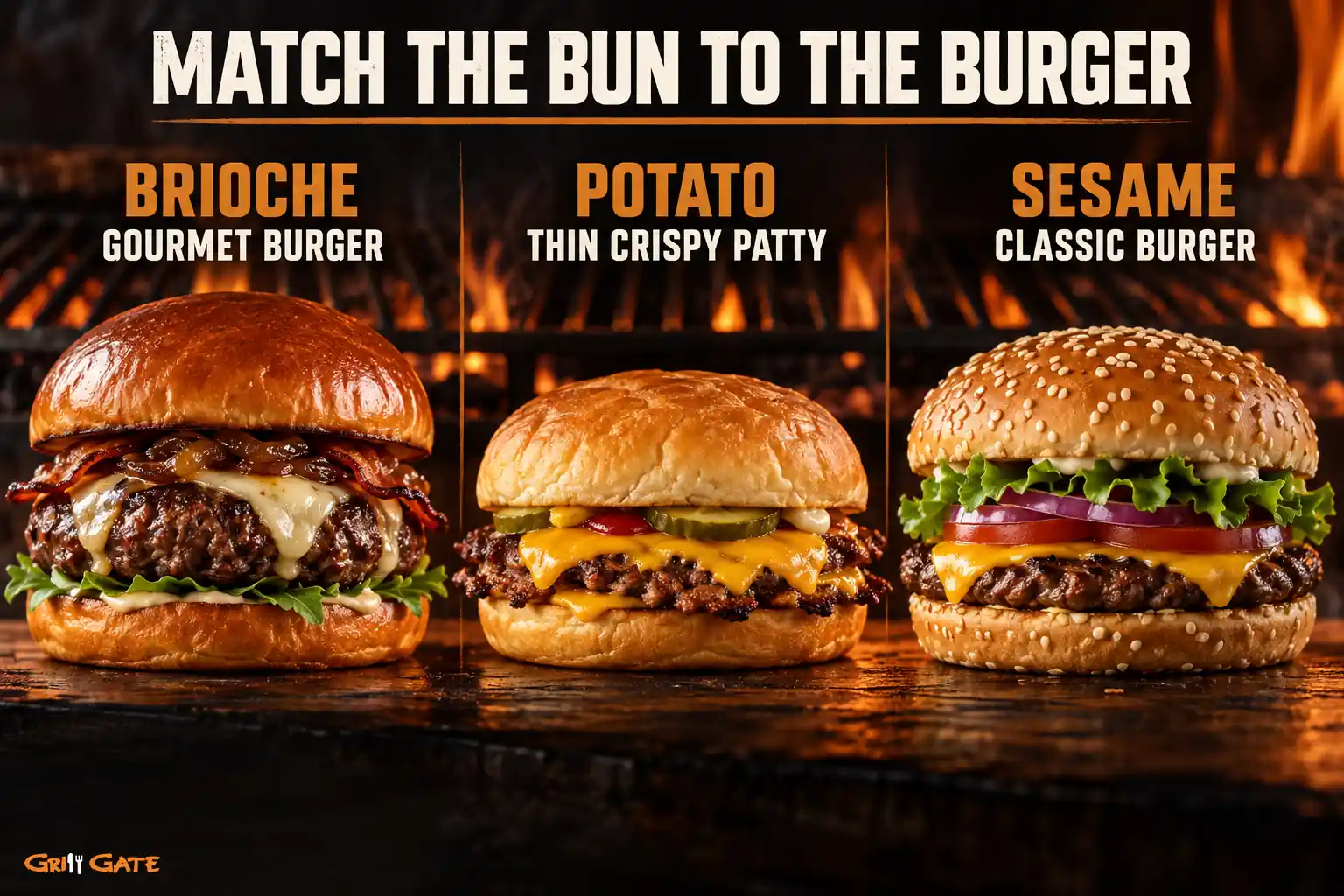
How to Choose the Right Burger Bun
Use the following shortcut:
- Choose brioche for a rich, buttery and slightly sweet gourmet burger.
- Choose potato for a soft, flexible bun that complements crispy patties.
- Choose sesame for a familiar, balanced and classic burger experience.
Also consider the complete burger:
- Heavy patty and bold toppings: Brioche or a sturdy sesame bun
- Thin crispy patty and simple toppings: Potato bun
- Classic hamburger or cheeseburger: Sesame bun
- Sweet barbecue sauce: Potato or sesame bun
- Mushrooms and rich cheese: Brioche bun
- Pickles, onions and American-style cheese: Potato bun
The goal is not to select the most expensive or fashionable bun. It is to choose one that keeps the bread, beef, cheese, sauce and toppings in balance.
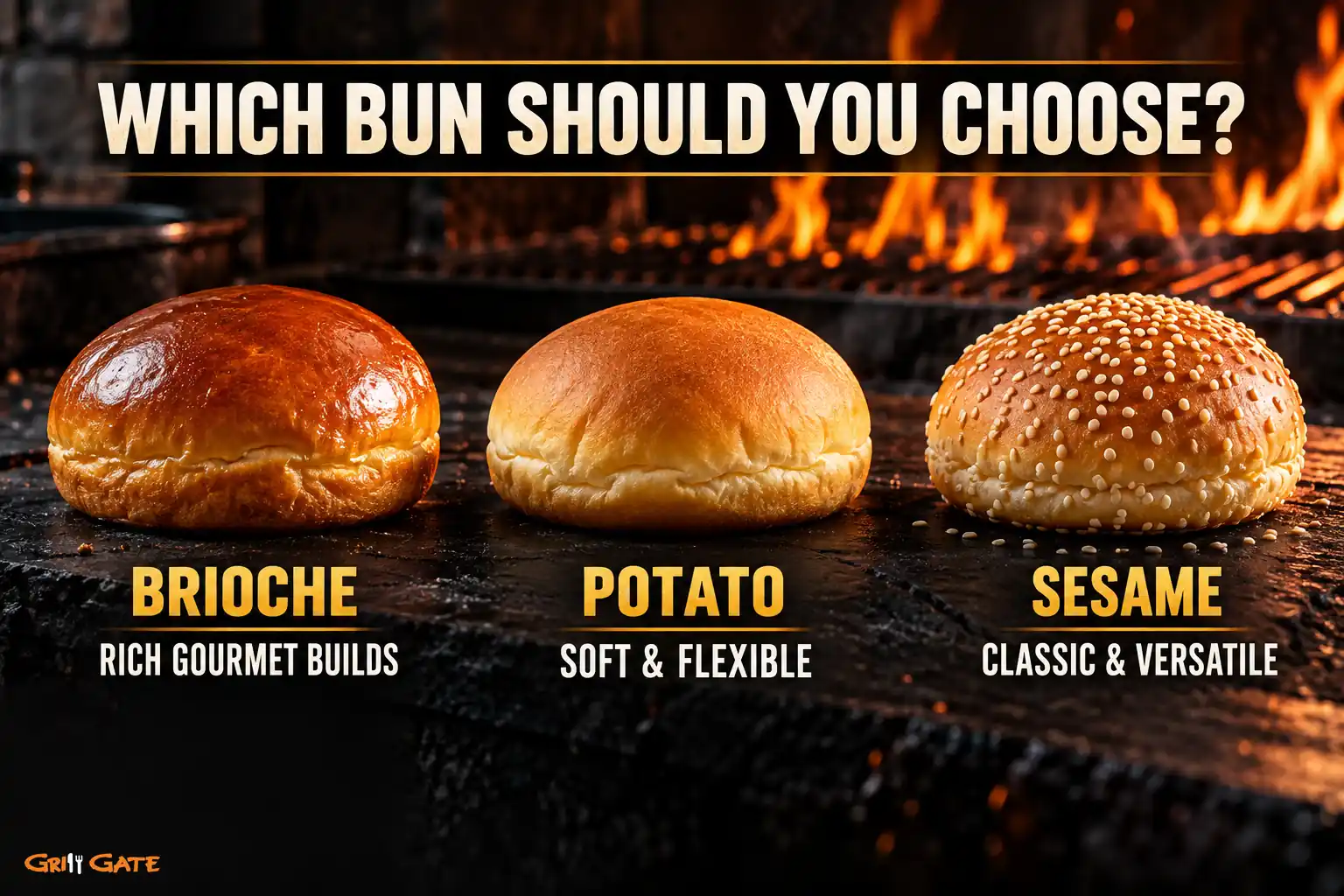
The Grill Gate Approach to Burger Balance
At Grill Gate, a substantial gourmet burger requires more than a large patty. The bun must support the weight of the beef and toppings while remaining comfortable to bite and preventing the fillings from sliding out.
A successful burger should deliver some bun, beef, cheese and toppings in every bite. If one component dominates, the overall experience becomes less balanced.
You can explore Grill Gate’s gourmet burger experience at our locations in:
Final Verdict
Brioche, potato and sesame buns each create a different burger experience.
A brioche bun adds buttery richness and light sweetness, making it suitable for substantial gourmet burgers. A potato bun provides softness, moisture and flexibility, which pair particularly well with thin crispy patties. A sesame bun offers familiar flavour and versatility for classic hamburgers and cheeseburgers.
The best burger bun is the one that supports the patty without distracting from it.
Frequently Asked Questions
What is the best type of bun for a burger?
There is no single best option. Brioche suits rich gourmet burgers, potato buns complement thin crispy patties, and sesame buns work well with classic hamburgers and cheeseburgers.
Is a brioche bun better than a potato bun?
Brioche is richer, sweeter and more buttery. A potato bun is softer, milder and more flexible. The better choice depends on whether you want richness or softness.
Do potato burger buns taste like potatoes?
Usually not strongly. Potato buns generally have a mild flavour, while the potato mainly affects their softness, moisture and texture.
Are sesame buns different from regular burger buns?
A sesame bun is often a standard white or enriched burger bun topped with sesame seeds. The seeds add mild nuttiness and texture, but the underlying dough determines most of the bun’s softness and structure.
Should burger buns be toasted?
Light toasting is usually helpful because it adds flavour and creates some protection against sauce and meat juices. Avoid over-toasting, which can make the bun difficult to bite.
Which bun is best for an 8 oz burger?
A brioche bun or sturdy sesame bun usually provides the structure needed for an 8 oz burger. The bun should be properly sized and lightly toasted so it can support the patty and toppings.