
The traditional bread for a Philly cheesesteak is a long Italian-style roll—often called a hoagie roll. It should have a soft, slightly chewy interior and a thin exterior crust strong enough to hold hot steak, melted cheese and onions without becoming soggy or splitting.
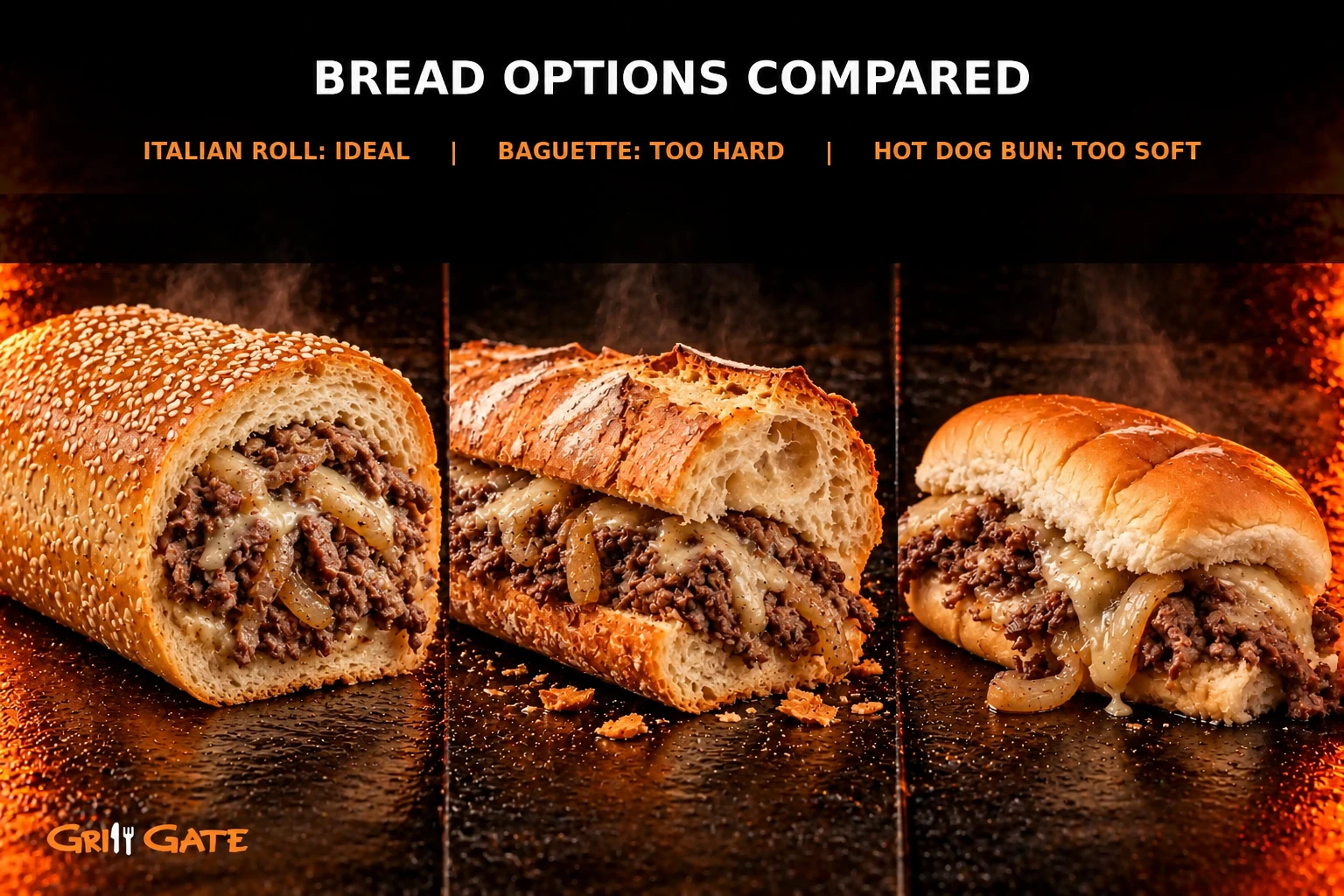
The bread should support the filling, not overpower it. A hard baguette can make the sandwich difficult to bite, while a very soft hot dog bun may collapse under the meat and juices.
Philly Cheesesteak Bread at a Glance
| Feature | Best Choice |
|---|---|
| Traditional bread | Long Italian or hoagie roll |
| Interior texture | Soft and slightly chewy |
| Exterior texture | Thin, lightly crusty and flexible |
| Shape | Long and narrow |
| Ideal length | Approximately 8–12 inches |
| Best-known Philadelphia option | Amoroso’s roll |
| Toasting | Lightly toasted or warmed |
| Avoid | Hard baguettes, fragile buns and overly sweet bread |
What Kind of Bread Is Used for a Philly Cheesesteak?
A classic Philly cheesesteak is served on a long Italian roll. In and around Philadelphia, this may also be described as a hoagie roll, steak roll or hearth-baked Italian roll.
The ideal roll combines two qualities that do not always appear together:
- It is soft enough to compress around the filling.
- It is sturdy enough to absorb meat juices and melted cheese.
This balance matters because a cheesesteak is a hot, moist and relatively heavy sandwich. The roll must hold thinly sliced beef, cheese and optional toppings while remaining comfortable to bite.
Visit Philadelphia describes the city’s iconic sandwich as “hot beef and melty cheese on a long flaky roll.” This highlights an important point: the roll is not merely packaging—it is part of the sandwich’s texture and identity. Read the Philadelphia cheesesteak guide from Visit Philadelphia. Visit Philadelphia
What Is an Italian Cheesesteak Roll?
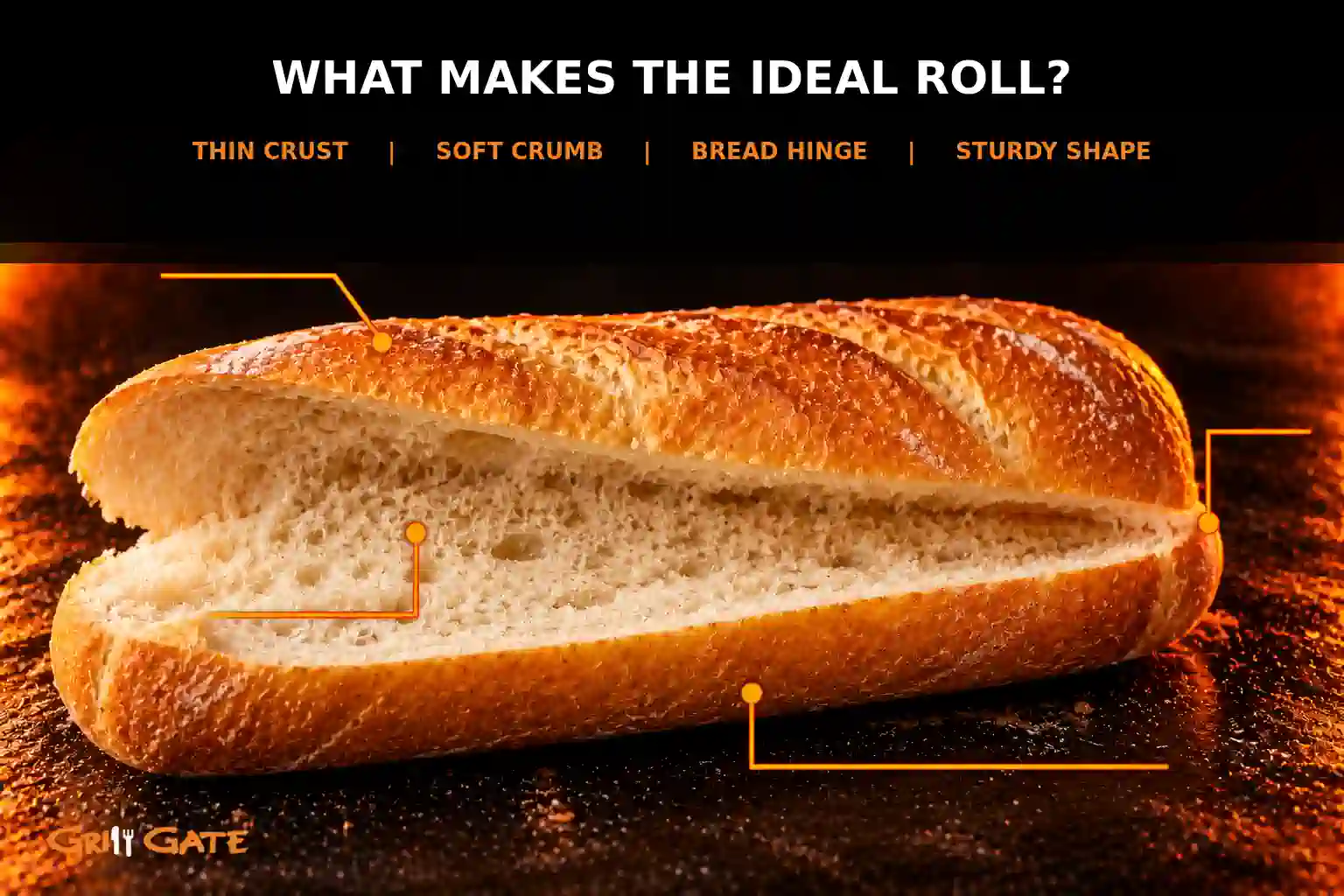
An Italian cheesesteak roll is a long white roll with a relatively lean dough and a soft but resilient crumb. It is usually less rich and less sweet than brioche.
A good Italian roll normally has:
- A lightly crisp or flaky exterior
- A soft and slightly chewy centre
- Enough structure to hold a generous portion of steak
- A neutral flavour that does not compete with the filling
- A hinged shape that keeps the sandwich together
The roll is generally sliced lengthwise without cutting completely through the opposite side. Leaving a hinge helps prevent the beef, cheese and toppings from falling out.
Is a Hoagie Roll the Same as a Cheesesteak Roll?
The terms are often used interchangeably, but the ideal texture may differ slightly depending on the sandwich.
A hoagie roll must hold cold cuts, vegetables, oil and other ingredients. A cheesesteak roll must withstand hot beef, melted cheese and cooking juices. For that reason, the best cheesesteak rolls are usually soft enough to absorb some flavour while maintaining their structure.
Not every roll labelled “hoagie” will perform equally well. Some are too dry, too dense or too soft. The name matters less than the actual texture.
Look for a roll that bends slightly when pressed but returns to shape instead of cracking or collapsing.
What Is an Amoroso Roll?
Amoroso’s is one of the best-known roll brands associated with Philadelphia cheesesteaks. Its Italian-style rolls have a thin exterior and soft interior designed to hold hot sandwich fillings.
However, a cheesesteak does not need an Amoroso’s roll to be enjoyable. It needs the characteristics associated with a good Philadelphia-style roll.
If Amoroso’s bread is unavailable, choose a fresh Italian or hoagie roll that is:
- Long rather than round
- Soft inside
- Lightly crusty outside
- Neutral rather than sweet
- Strong enough to hold hot ingredients
Amoroso’s is a recognizable Philadelphia tradition, but freshness, texture and structure are more important than the name printed on the package. Philadelphia sources also identify Amoroso’s and Sarcone’s among the city’s popular roll makers. Visit Philadelphia Media Center
Why Does the Roll Matter So Much?
The roll affects almost every part of the cheesesteak experience.
It keeps the sandwich together
A weak roll may tear at the bottom after absorbing steak juices. A well-structured roll keeps the filling contained from the first bite to the last.
It controls moisture
The interior should absorb a limited amount of moisture without immediately becoming gummy. This allows the bread to pick up the flavour of the beef and cheese while remaining intact.
It affects each bite
Bread that is too hard compresses the filling and pushes it out of the sides. Bread that is too soft may collapse. The correct roll gives slightly when bitten and keeps the ingredients evenly distributed.
It balances the filling
A thick or dense roll can create too high a bread-to-meat ratio. A very thin roll may not support the filling. The size of the roll should match the quantity of steak.
The bread is also one of the details that separates a cheesesteak from a general steak sandwich. Our guide to Philly cheesesteak vs steak sandwich explains the other differences in meat preparation, cheese, structure and toppings.
Should a Philly Cheesesteak Roll Be Soft or Crusty?
It should be both—but only to a moderate degree.
The interior should be soft and slightly chewy. The exterior should have a thin crust with enough resistance to protect the sandwich. It should not be as hard or brittle as a traditional French baguette.
A useful test is to press the roll gently:
- If it cracks immediately, it may be too hard.
- If it remains completely flattened, it may be too soft.
- If it compresses and slowly returns to shape, it is likely suitable.
The best roll creates a gentle contrast between the surface and the soft interior without making the sandwich difficult to eat.
Should the Roll Be Toasted?
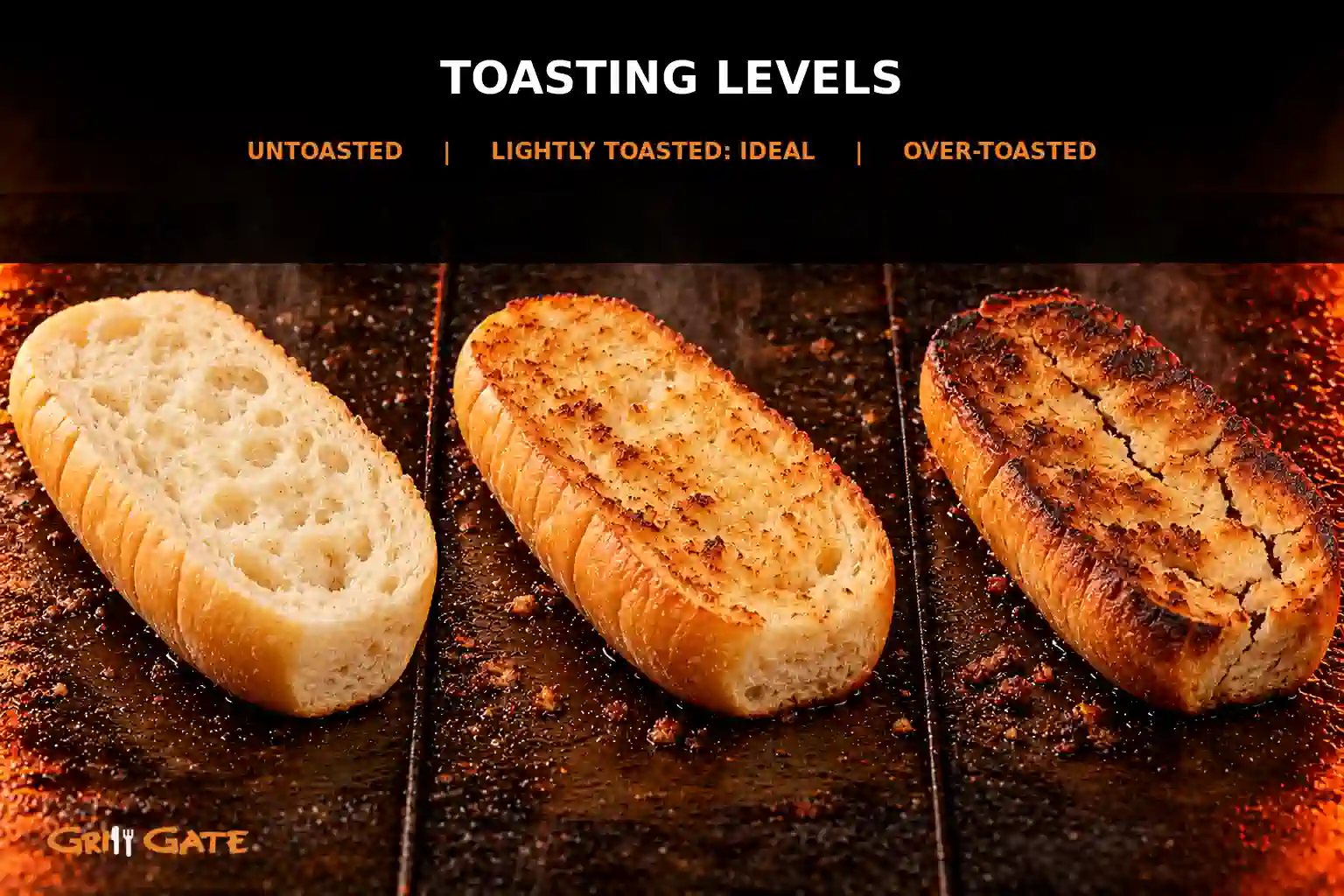
Light toasting can improve a cheesesteak roll, but heavy toasting usually works against the sandwich.
Gently warming or toasting the cut surfaces can:
- Add a little structure
- Reduce immediate moisture absorption
- Improve aroma
- Help melted cheese adhere to the bread
- Prevent the bottom from becoming soggy too quickly
However, the roll should remain flexible. Over-toasting creates a hard shell that may cut the mouth, crack when folded or force the filling out during each bite.
A light griddle toast is generally enough. The goal is to warm and reinforce the bread—not turn it into garlic toast.
Can You Use a Baguette for a Philly Cheesesteak?
A baguette can hold the filling, but it is usually not the best choice for a traditional cheesesteak.
Most baguettes have:
- A thicker, harder crust
- A more open crumb
- Greater resistance when bitten
- A tendency to push fillings out of the sandwich
If a baguette is the only available option, choose a softer version and remove a small amount of the interior crumb if necessary. Warm it briefly rather than heavily toasting it.
A soft Italian roll will generally produce a more balanced and comfortable sandwich.
Can You Use a Sub Roll or Hot Dog Bun?
A fresh sub roll can be a practical substitute if it has enough structure. Look for one that resembles a soft Italian roll rather than a dense baguette.
A hot dog bun is less suitable because it is usually:
- Too short
- Too narrow
- Too soft
- Unable to support a substantial quantity of steak
- More likely to become gummy or split
Hot dog buns may work for small homemade portions, but they do not provide the structure or bread-to-filling balance expected from a full cheesesteak.
Can You Use Brioche?
Brioche can hold a cheesesteak, but it creates a different flavour profile.
Its butter, eggs and slight sweetness make it richer than a traditional Italian roll. That richness may compete with the beef, cheese and onions rather than allowing them to remain the focus.
Brioche works better when you intentionally want a sweeter, richer and more modern interpretation. For a more traditional experience, use a neutral Italian or hoagie roll.
Brioche also behaves differently from other breads. Our guide to brioche, potato and sesame burger buns explains how the dough and texture of each bun affect a sandwich.
How Wide Should the Roll Be?
A cheesesteak roll should be wide enough to contain the meat but narrow enough to keep the ingredients together.
An oversized roll can make the sandwich taste dry because each bite contains too much bread. A narrow roll may split or spill the filling.
The roll should allow the steak to form a generous layer without requiring the bread to be stretched completely open. Ideally, the meat, cheese and bread should appear in every bite.
How Do You Keep Cheesesteak Bread from Getting Soggy?
Sogginess usually results from excess moisture, incorrect assembly or a roll that is too soft.
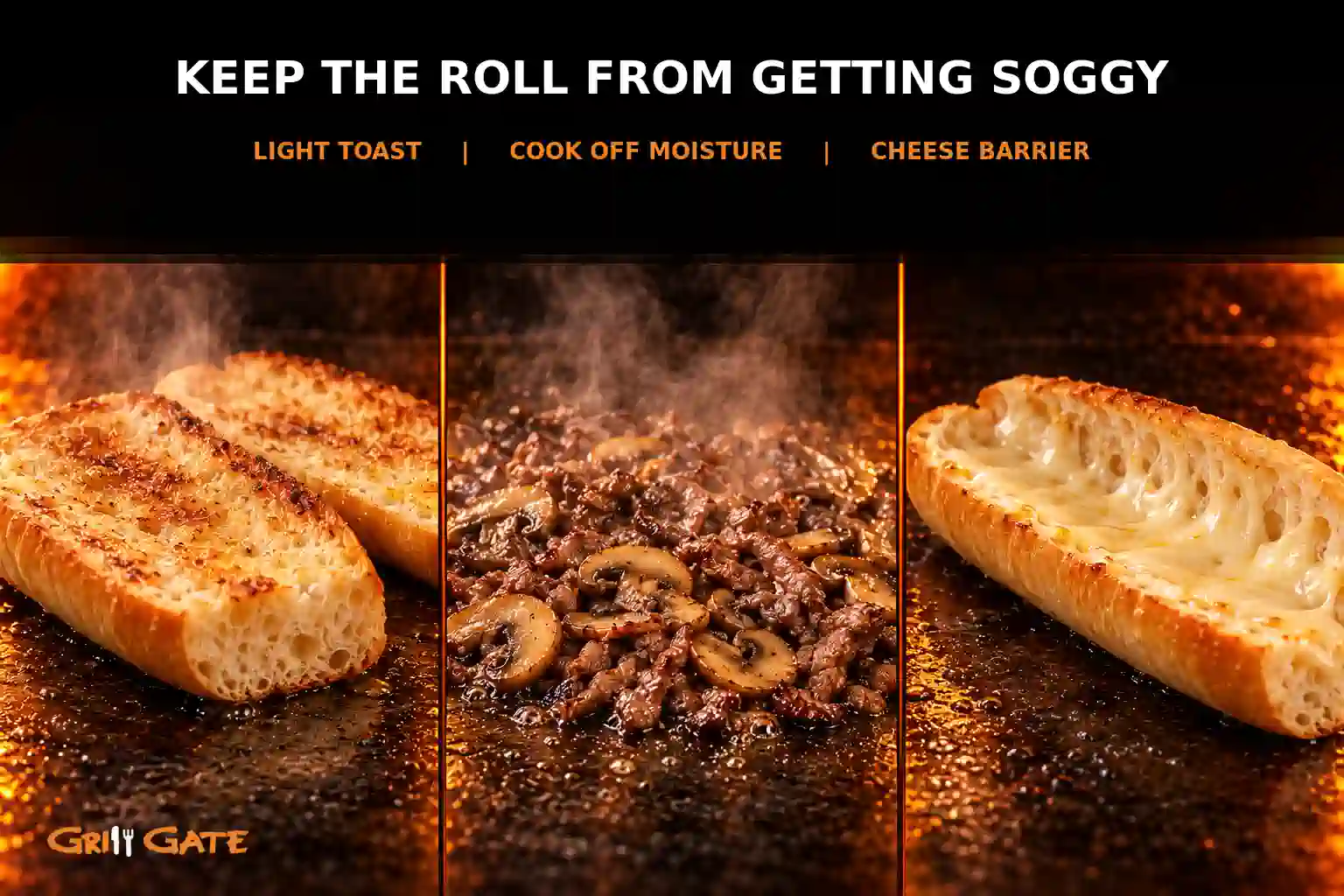
To protect the bread:
- Lightly toast the cut sides.
- Allow excess cooking liquid to evaporate from the steak.
- Cook mushrooms until their released moisture has evaporated.
- Avoid adding excessive sauce directly to the bottom of the roll.
- Add cheese between the bread and meat to create a partial moisture barrier.
- Assemble the sandwich immediately before serving.
Wet toppings can create as much of a problem as the meat itself. For help balancing onions, peppers and mushrooms, read our guide to Philly cheesesteak toppings.
What Is the Best Grocery-Store Substitute?
If you cannot find a Philadelphia-style roll, use this order of preference:
- Fresh Italian sandwich roll
- Soft hoagie roll
- Quality sub roll
- Soft French roll
- Partially hollowed soft baguette
Check the bakery section rather than relying only on packaged bread. Fresh bakery rolls often provide a better crust-to-crumb balance.
Avoid rolls that are extremely sweet, heavily seasoned or covered with strong toppings. The bread should complement the steak rather than become the dominant flavour.
How Should You Store Cheesesteak Rolls?
Fresh rolls are best used the day they are purchased. If that is not possible:
- Keep them sealed at room temperature for short-term storage.
- Freeze them if they will not be used within a day or two.
- Allow frozen rolls to thaw while wrapped to reduce moisture loss.
- Warm them briefly before assembling the sandwich.
- Avoid refrigerating bread for long periods, as refrigeration can accelerate staling.
Do not overheat a frozen roll in the microwave. This can make the crumb rubbery and the exterior tough after it cools.
How Bread, Cheese and Toppings Work Together
A great cheesesteak is built as one balanced sandwich rather than a collection of separate ingredients.
The bread provides structure. The beef delivers savoury flavour and moisture. The cheese connects the filling, while onions and other toppings add sweetness, heat or depth.
Changing one element affects the others:
- A softer roll benefits from a controlled amount of sauce.
- A crustier roll may need more moisture.
- A mild roll allows stronger cheese to stand out.
- A rich bread may require simpler toppings.
- A heavily loaded sandwich needs more structure.
If you are still deciding between provolone, American cheese and other options, see our guide to what cheese goes on a Philly cheesesteak.
How to Order a Balanced Philly Cheesesteak
When ordering, think beyond choosing only the cheese and onions. Consider how the complete sandwich will eat.
A balanced cheesesteak should have:
- A roll that stays intact
- Tender, thinly sliced beef
- Cheese distributed throughout the filling
- Toppings that do not release excessive moisture
- Enough filling to reach both ends of the roll
- A bread-to-meat ratio that remains consistent
Our complete guide to how to order a Philly cheesesteak walks through the choices step by step.
Final Verdict: What Is the Best Bread for a Philly Cheesesteak?
The best bread for a Philly cheesesteak is a fresh, long Italian or hoagie roll with a soft, slightly chewy interior and a thin, lightly crusty exterior.
Amoroso’s is the most recognizable Philadelphia-style option, but the brand is less important than the roll’s performance. It must hold hot steak, melted cheese and toppings without splitting, becoming immediately soggy or overpowering the filling.
Choose a neutral, flexible and sturdy roll—and toast it only lightly.
Try a Philly Steak Sandwich at Grill Gate
The right roll is only one part of a satisfying steak sandwich. The beef, melted cheese, toppings and bread must work together in every bite.
You can experience Grill Gate’s approach to Philly steak sandwiches at our locations in Richmond Hill, Aurora, North York on Sheppard Avenue West and North York on Yonge Street.
EXPLORE GRILL GATE
See What’s on the Grill
Explore our burgers, Philly cheesesteaks, pizza, sides and more before choosing your favourite.
Frequently Asked Questions
What is the traditional bread for a Philly cheesesteak?
A traditional Philly cheesesteak is served on a long Italian-style or hoagie roll. It should be soft inside, lightly crusty outside and strong enough to hold the hot filling.
Is an Amoroso roll required for a Philly cheesesteak?
No. Amoroso’s is strongly associated with Philadelphia cheesesteaks, but any fresh Italian roll with the correct softness, shape and structure can work well.
Is a Philly cheesesteak served on a baguette?
Traditionally, no. A standard baguette is generally harder and crustier than a cheesesteak roll. A softer Italian or hoagie roll creates a more comfortable bite.
Should cheesesteak bread be toasted?
Light toasting is helpful because it strengthens the cut surfaces and reduces sogginess. Heavy toasting should be avoided because it can make the roll hard and brittle.
Can I use a sub roll for a Philly cheesesteak?
Yes, provided that the sub roll is fresh, soft inside and sturdy enough to hold the meat and cheese. Avoid very soft rolls that collapse or dense rolls that dominate the filling.
Why does my cheesesteak bread become soggy?
Common causes include excess liquid from the meat, undercooked mushrooms, too much sauce and bread that is too soft. Lightly toasting the roll and allowing excess moisture to evaporate can help.