
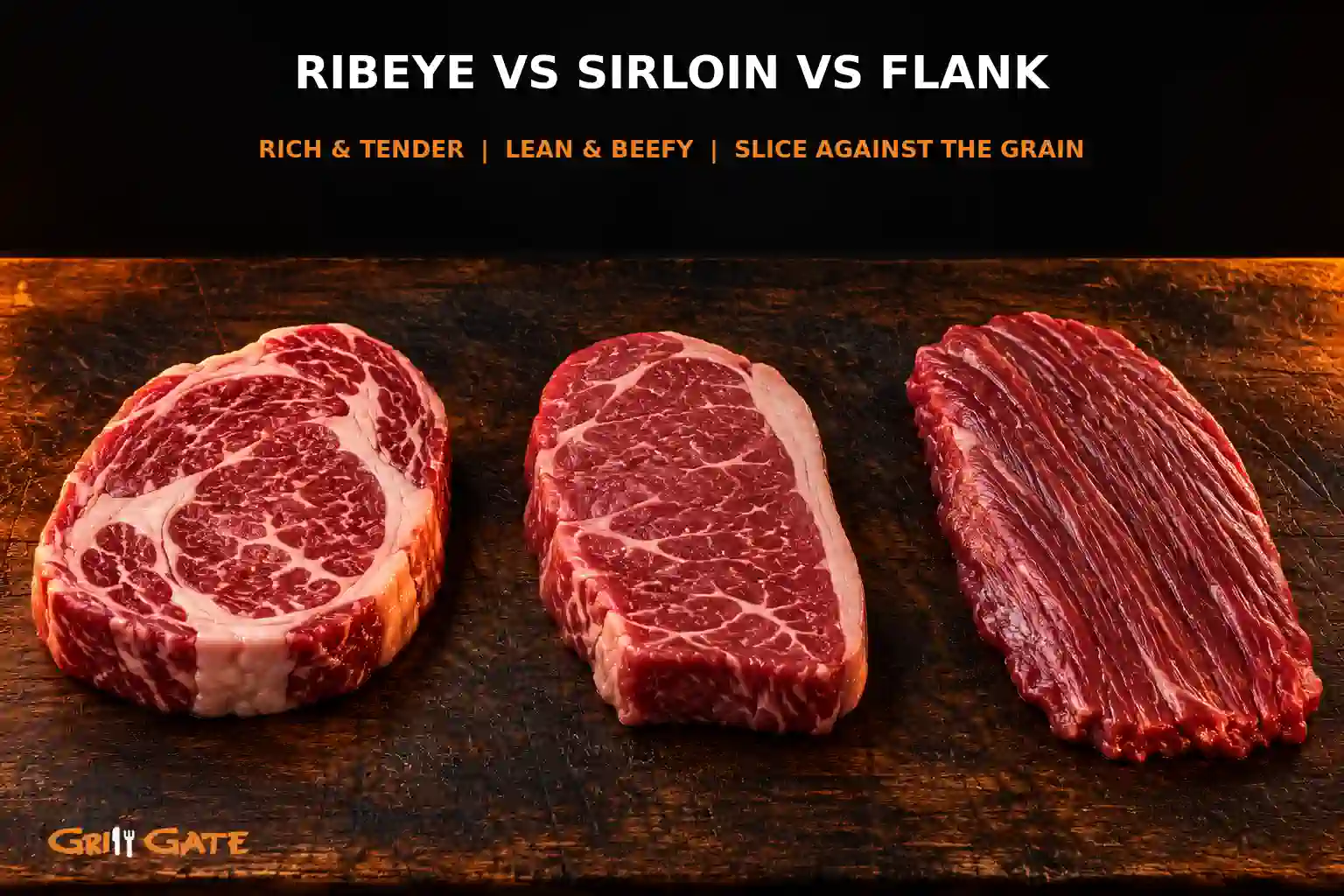
Ribeye is generally the best steak cut for a Philly cheesesteak because its marbling keeps the thin slices juicy, tender and flavourful during fast griddle cooking. However, top sirloin, flank steak, skirt steak and top round can also work when sliced very thinly and cooked correctly.
The best alternative depends on whether you prioritize tenderness, beef flavour, lower fat or a more affordable price.
Best Cheesesteak Cuts at a Glance
| Steak cut | Tenderness | Fat level | Beef flavour | Best quality | Possible drawback |
|---|---|---|---|---|---|
| Ribeye | High | High | Rich | Best overall choice | Higher price |
| Top sirloin | Medium to high | Medium-low | Strong | Best balanced alternative | Less juicy than ribeye |
| Flank steak | Medium | Low | Strong | Lean and flavourful | Must be cut against the grain |
| Skirt steak | Medium | Medium | Very strong | Boldest beef flavour | Can become chewy |
| Top round | Low to medium | Low | Mild to medium | Best budget option | Dries out easily |
| Chuck eye | Medium to high | Medium-high | Rich | Affordable marbled option | More connective tissue |
Why Is Ribeye the Best Steak for a Philly Cheesesteak?
Ribeye provides the combination of marbling, tenderness and beef flavour that works particularly well on a hot griddle.
Marbling refers to the thin streaks of fat running through the meat. As the ribeye cooks, this fat melts and coats the thin slices, helping them remain juicy even when cooked quickly at a high temperature.
Ribeye is also naturally tender. Because a cheesesteak is eaten in a sandwich rather than cut with a steak knife, the meat needs to separate easily when bitten. Tough strips can pull the filling out of the roll and make the sandwich difficult to eat.
According to Visit Philadelphia, a traditional cheesesteak includes “thinly sliced, freshly sautéed ribeye beef” with melted cheese on a long roll. Read Visit Philadelphia’s guide to the city’s signature sandwiches. www.visitphilly.com
What Part of the Ribeye Should You Use?
Boneless ribeye is usually the easiest option because it requires less preparation and can be sliced evenly.
You do not need thick steakhouse-style ribeye. What matters is:
- Consistent marbling
- Minimal hard connective tissue
- Fresh beef flavour
- Thin and even slicing
- A suitable meat-to-fat balance
Large exterior pieces of hard fat should be trimmed. The fine internal marbling should remain because it contributes flavour and moisture during cooking.
Ribeye cap is especially tender and rich, but using it alone would be unnecessarily expensive for most cheesesteaks. A standard boneless ribeye provides a better balance of quality and value.
Is Top Sirloin Good for Philly Cheesesteak?
Top sirloin is one of the best alternatives to ribeye.
It has a pronounced beef flavour and is usually more affordable and leaner than ribeye. When sliced thinly, it can produce a tender and satisfying cheesesteak without excessive fat.
Top sirloin works best for people who want:
- Strong beef flavour
- Less visible fat
- A slightly firmer texture
- Better value than ribeye
- A sandwich that feels less rich
Because sirloin contains less marbling, the cooking surface may need a small amount of oil. It is also important not to cook it for too long. Once the thin slices have browned and are no longer raw, they should be combined with the cheese and served.
The main difference is juiciness. Ribeye naturally bastes itself with rendered fat, while sirloin depends more heavily on precise cooking.
Can You Use Flank Steak?
Flank steak can make an excellent lean cheesesteak if it is sliced correctly.
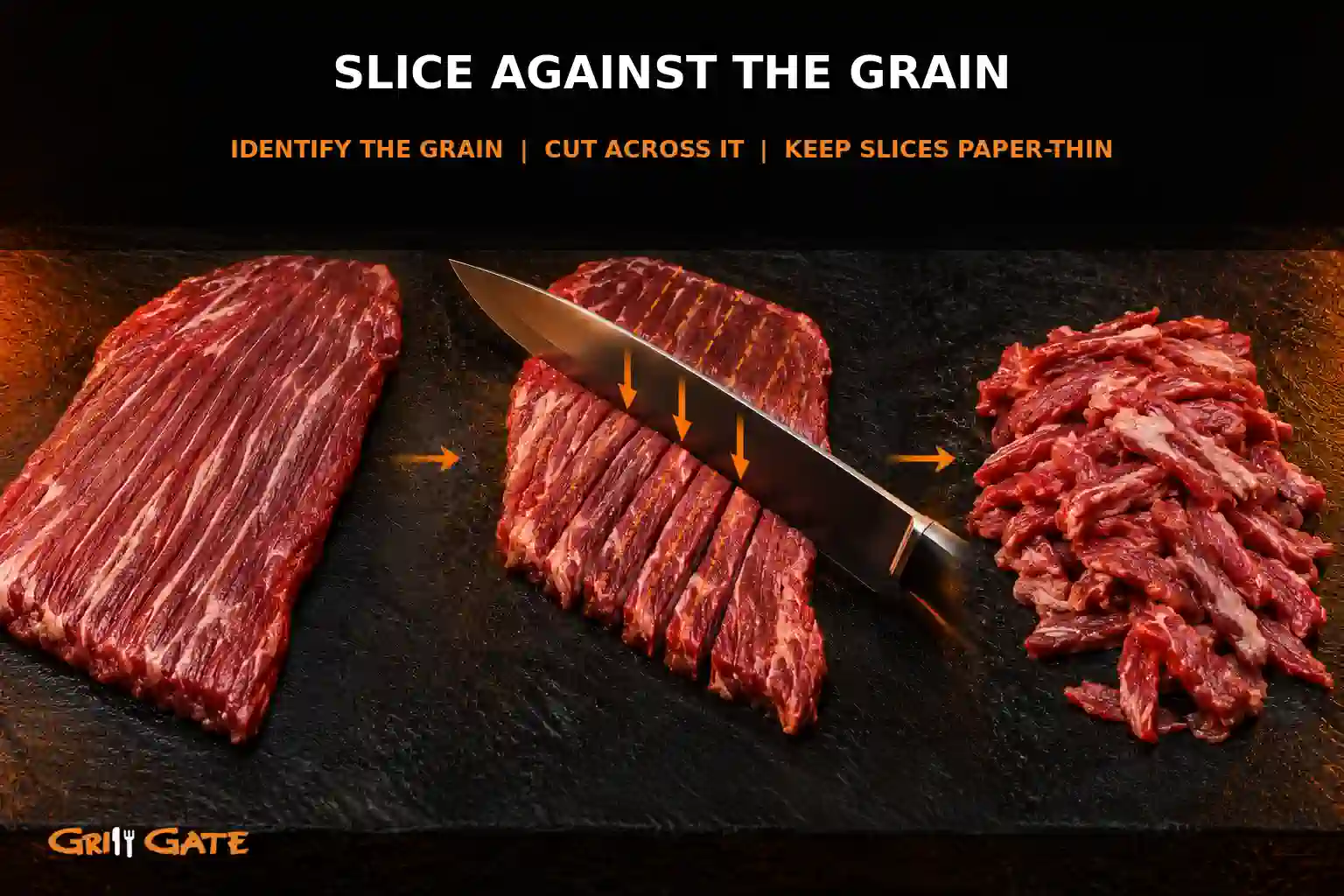
The muscle fibres in flank steak are long and clearly visible. Cutting across those fibres shortens them, making the meat easier to chew. Slicing with the grain leaves long fibres that may feel stringy or tough.
For the best result:
- Chill the steak until firm.
- Identify the direction of the grain.
- Slice across the grain.
- Keep the slices as thin as possible.
- Cook quickly over high heat.
- Avoid overcrowding the cooking surface.
Flank steak has less fat than ribeye, so the finished sandwich will taste leaner and slightly firmer. A little oil, melted cheese and properly cooked onions can help maintain moisture.
Is Skirt Steak a Good Alternative?
Skirt steak has a very strong beef flavour and cooks quickly, making it another possible alternative.
It is thinner than many other cuts, but its fibres are coarse. It must be sliced across the grain and should not be overcooked.
Skirt steak is a good choice when bold flavour is more important than maximum tenderness. It works particularly well with:
- Grilled onions
- Provolone
- Hot peppers
- Mushrooms
- Stronger sauces
However, skirt steak can become chewy if the slices are too thick. It may also have sections of membrane or connective tissue that should be removed before slicing.
Can You Make Cheesesteak with Top Round?
Top round is a lean and economical option, but it requires more careful preparation.
Because it contains relatively little fat, top round can dry out quickly. It should be sliced paper-thin and cooked only until done. Thick pieces of top round are unlikely to provide the tender texture expected from a cheesesteak.
Top round works best when:
- The budget is the main concern.
- The meat is sliced with a deli slicer.
- The griddle is properly preheated.
- A small amount of oil is used.
- The meat is not left cooking after it has browned.
- Cheese is melted into the beef promptly.
It will not provide the same richness as ribeye, but thin slicing can make it a practical substitute.
What About Chuck Eye?
Chuck eye is sometimes described as a lower-cost relative of ribeye because it can contain good marbling and rich flavour.
It can work for a cheesesteak, but the quality varies. Some pieces are tender and well-marbled, while others contain more connective tissue.
If using chuck eye:
- Trim tough seams and large pieces of fat.
- Slice only the tender sections.
- Cut very thinly across the grain.
- Remove any chewy connective tissue before cooking.
Chuck eye may offer more richness than sirloin or round, but it requires more trimming and careful selection.
Ribeye vs Sirloin for Philly Cheesesteak
The choice between ribeye and sirloin depends on the desired result.
Choose ribeye if you want:
- The most tender texture
- Richer flavour
- More natural juiciness
- Traditional cheesesteak character
- Greater tolerance for high-heat cooking
Choose top sirloin if you want:
- A leaner sandwich
- Strong beef flavour
- A more affordable option
- Less rendered fat
- A slightly firmer bite
Ribeye is the better overall cut, but top sirloin is the most balanced substitute for many home cooks.
Does the Steak Cut Matter More Than Slicing?
The cut matters, but slicing technique can determine whether the sandwich succeeds.
Even ribeye can feel tough when sliced too thickly. A leaner cut can remain enjoyable when sliced paper-thin across the grain.
Three factors work together:
- Cut: Determines natural tenderness, fat and flavour.
- Slice thickness: Determines how easily the meat cooks and separates.
- Grain direction: Determines how much chewing is required.
For ribeye, thin slicing is usually sufficient because it is already tender. For flank, skirt, sirloin and round, slicing across the grain becomes more important.
How Thin Should Cheesesteak Meat Be?
The beef should be sliced very thinly—closer to shaved meat than conventional steak strips.
Thin slices provide several advantages:
- They cook quickly.
- They remain easy to bite.
- They mix evenly with cheese and onions.
- They distribute across the entire roll.
- They develop browned edges without a raw centre.
- They are easier to chop on the griddle.
If the beef is thick enough to require a knife at the table, it is too thick for a traditional cheesesteak-style sandwich.
How Do You Slice Steak Thinly at Home?
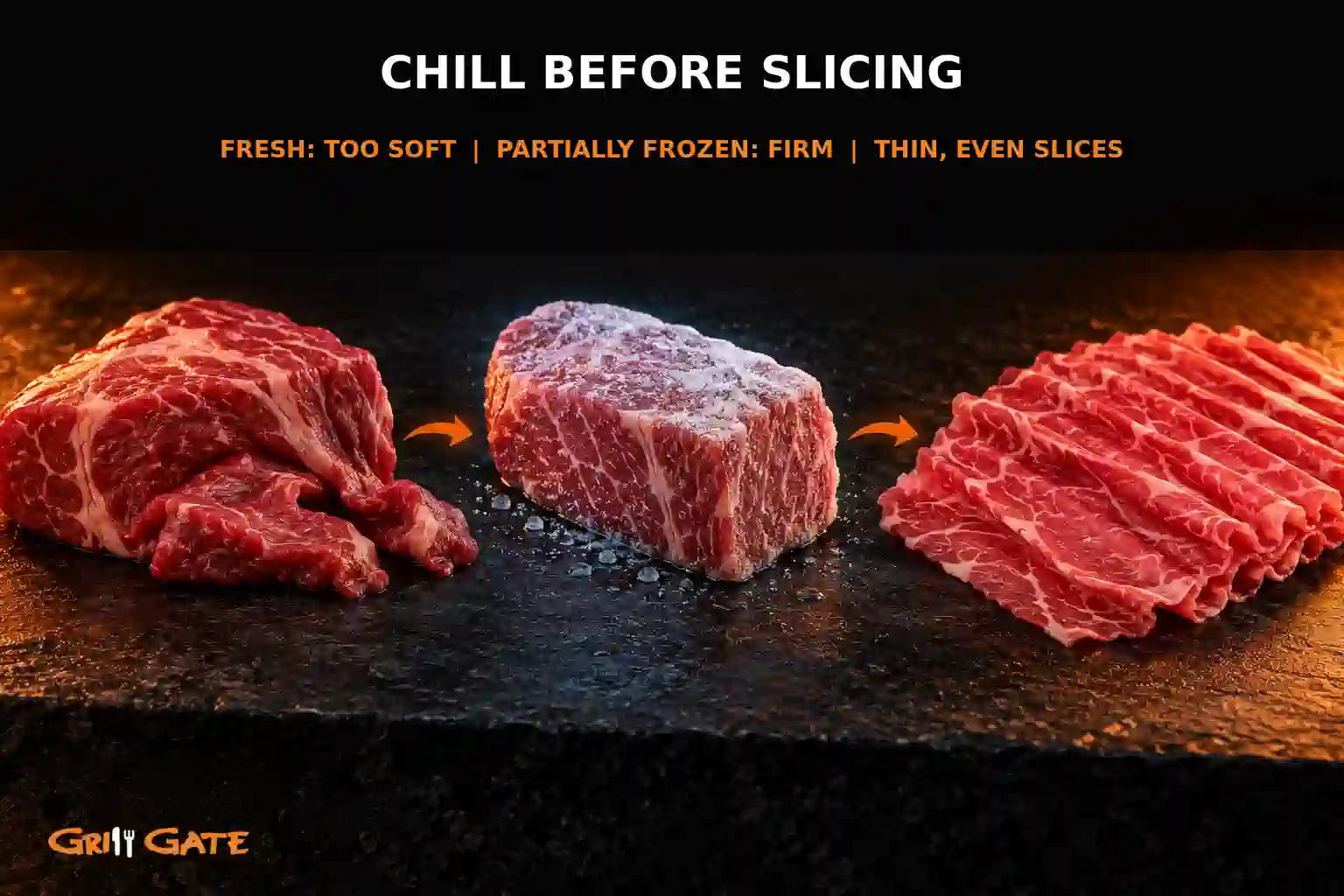
Partially chilling the steak makes thin slicing considerably easier.
Place the beef in the freezer briefly until it becomes firm but not completely frozen. A firm steak moves less under the knife and allows more consistent slices.
Then:
- Use a long, sharp knife.
- Remove obvious connective tissue.
- Identify the direction of the grain.
- Slice across the grain when using leaner cuts.
- Keep the slices thin and consistent.
- Separate any pieces that remain too thick.
A butcher may also be able to prepare shaved or thinly sliced beef. This is often the easiest way to achieve consistent results without a deli slicer.
Should Cheesesteak Meat Be Chopped or Left in Slices?
Both styles are common.
Chopped steak
Chopping the meat on the griddle creates smaller pieces that blend closely with the cheese and onions. It produces a more uniform filling and makes the sandwich easy to bite.
Sliced steak
Leaving the beef in thin ribbons preserves more noticeable steak texture. It can feel meatier, but the slices must remain short and tender enough to bite cleanly.
The best approach is often a middle ground: begin with thin slices and use the spatula to break up overly long pieces during cooking without reducing the meat to a fine mince.
How Should Cheesesteak Meat Be Cooked?
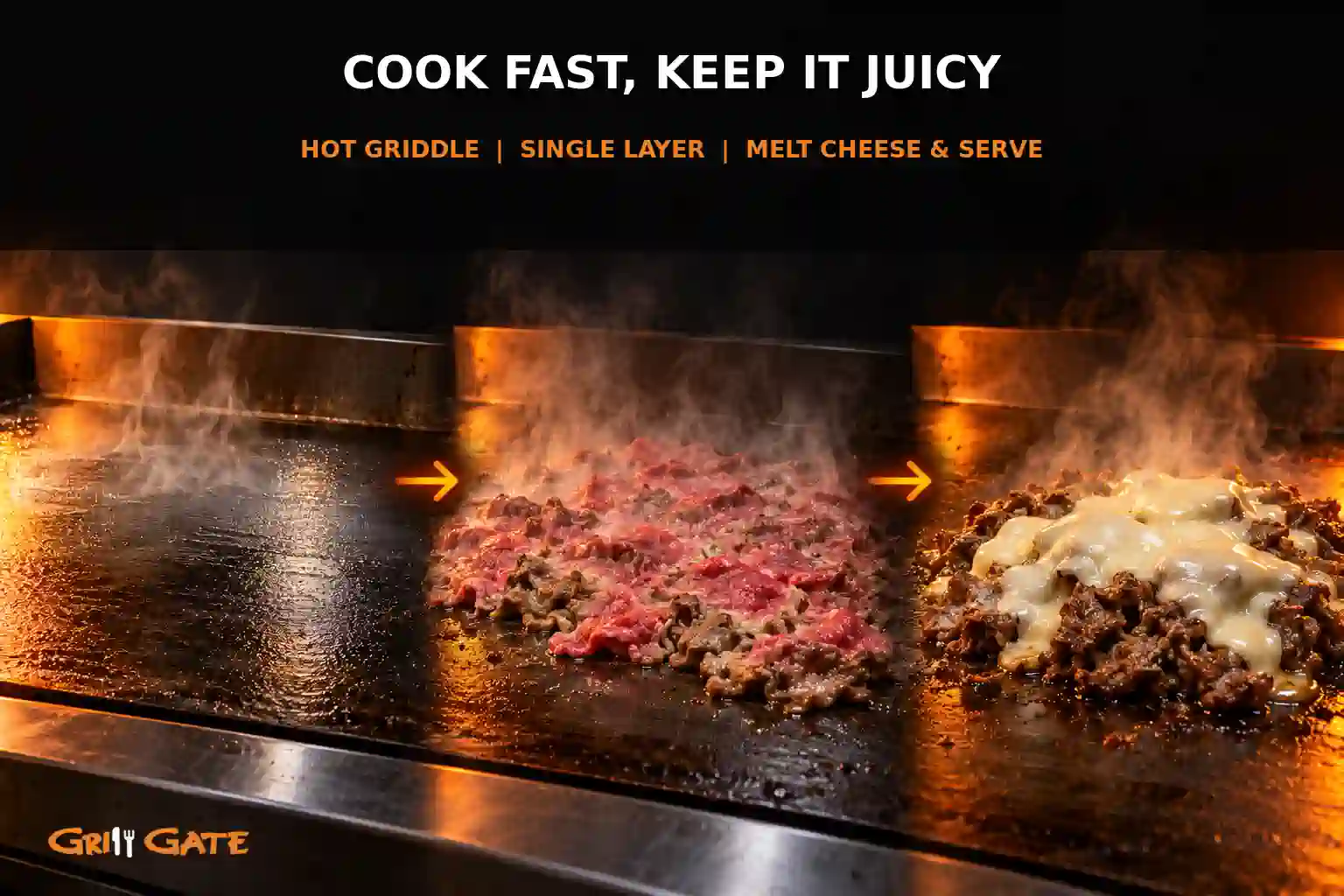
The cooking surface should be hot enough to brown the beef quickly without steaming it.
For the best texture:
- Preheat the griddle or skillet.
- Cook in manageable portions.
- Avoid crowding the surface.
- Spread the beef into a relatively thin layer.
- Allow some browning before moving it constantly.
- Break up long pieces with a spatula.
- Add cheese before the meat dries out.
- Transfer the filling to the roll immediately.
Crowding the griddle traps steam. Instead of browned, flavourful edges, the meat may become grey and watery.
If mushrooms or peppers are being added, cook their excess moisture away before combining them with the beef. Our guide to Philly cheesesteak toppings explains how onions, peppers and mushrooms affect flavour and moisture.
Does a Leaner Cut Need More Oil?
Usually, yes—but only a small amount.
Ribeye releases its own fat as it cooks. Top sirloin, flank steak and top round may stick or dry out without a light coating of cooking oil.
Use enough oil to coat the cooking surface rather than soaking the meat. Excess oil can make the sandwich greasy and weaken the roll.
Cheese and sautéed onions also contribute moisture, so the goal is not to make lean beef as fatty as ribeye. It is simply to prevent sticking and excessive dryness.
What Steak Cuts Should You Avoid?
Some cuts can technically be used but are poorly suited to fast cheesesteak cooking.
Avoid or reconsider:
- Stewing beef: Usually too tough for quick griddle cooking.
- Brisket: Better suited to slow cooking unless already cooked and sliced.
- Untrimmed chuck: May contain tough connective tissue.
- Eye of round cut thickly: Very lean and likely to become dry.
- Tenderloin: Tender but expensive and relatively mild for this purpose.
- Pre-cut thick stir-fry strips: Often too thick for a proper cheesesteak texture.
- Ground beef: Creates a different sandwich rather than a traditional cheesesteak.
The most expensive cut is not automatically the best. The ideal meat must provide tenderness, beef flavour, enough moisture and the ability to cook rapidly in thin slices.
How Do Beef, Cheese and Bread Work Together?
A cheesesteak is successful when the meat, cheese and roll behave as one filling.
Richer ribeye can support sharper cheese and acidic peppers. Lean sirloin may benefit from creamy American cheese or a slightly richer sauce. Skirt steak can stand up to bold onions and hot peppers.
The bread also has to match the filling. A soft but sturdy Italian roll absorbs some juices without collapsing. Learn more in our guide to Philly cheesesteak bread and the type of roll traditionally used.
For cheese selection, compare the melting behaviour and flavour of the traditional options in what cheese goes on a Philly cheesesteak.
Best Steak Cut Based on Your Priority
Use this simple guide:
- Best overall: Ribeye
- Best leaner alternative: Top sirloin
- Best strong beef flavour: Skirt steak
- Best lean option: Flank steak
- Best budget option: Top round
- Best lower-cost marbled option: Carefully trimmed chuck eye
If you are unsure, choose ribeye. If ribeye is unavailable or outside the budget, top sirloin is usually the safest alternative.
Final Verdict
Ribeye is the best steak cut for a Philly cheesesteak because its marbling, tenderness and rich flavour suit fast griddle cooking. It stays juicy when sliced thinly and creates the classic beef-forward character associated with the sandwich.
Top sirloin is the best all-around alternative. Flank and skirt steak offer strong flavour when cut correctly, while top round provides a more affordable option when shaved very thinly.
Regardless of the cut, three rules matter most: slice the meat thinly, cut across the grain when necessary and avoid overcooking it.
Try a Ribeye Philly Steak Sandwich at Grill Gate
At Grill Gate, our Philly steak sandwiches are prepared with fresh, thinly sliced ribeye, melted cheese and carefully selected toppings served on a roll that supports the generous filling.
Visit Grill Gate in Richmond Hill, Aurora, North York on Sheppard Avenue West or North York on Yonge Street to experience our approach to a satisfying Philly steak sandwich.
If you are deciding on the complete sandwich—not only the beef—our guide to ordering a Philly cheesesteak covers cheese, onions and toppings step by step.
EXPLORE GRILL GATE
See What’s on the Grill
Explore our burgers, Philly cheesesteaks, pizza, sides and more before choosing your favourite.
Frequently Asked Questions
What is the best steak for a Philly cheesesteak?
Ribeye is the best overall choice because it is tender, well-marbled and flavourful. Its fat keeps the thin slices juicy during high-heat cooking.
Can I use sirloin instead of ribeye?
Yes. Top sirloin is a leaner and usually more affordable alternative. Slice it thinly and avoid overcooking it because it contains less fat than ribeye.
Is flank steak good for cheesesteak?
Flank steak can work well when sliced very thinly across the grain. It has strong beef flavour but is leaner and slightly firmer than ribeye.
What is the cheapest steak cut for a cheesesteak?
Top round is one of the most affordable practical options. It must be sliced paper-thin and cooked quickly to prevent it from becoming dry or tough.
Should cheesesteak meat be frozen before slicing?
Briefly chilling the steak in the freezer makes it firmer and easier to slice thinly. It should be firm, not completely frozen solid.
Do you cut cheesesteak meat with or against the grain?
Leaner, more fibrous cuts such as flank, skirt, sirloin and round should be sliced against the grain. This shortens the muscle fibres and produces a more tender bite.
Is shaved beef the same as cheesesteak meat?
Shaved beef describes the slicing style rather than one specific cut. It may be made from ribeye, sirloin, round or another cut, so check the label or ask the butcher which cut was used.