
A Philly cheesesteak and a steak sandwich can both contain beef and bread, but they are not automatically the same dish.
A Philly cheesesteak is a specific style of steak sandwich built around thinly sliced or chopped beef, melted cheese and a long roll, with sautéed onions as a traditional option. A regular steak sandwich is a broader category that may use sliced steak, an intact steak, roast beef or another preparation, with almost any bread, sauce, cheese and topping combination.
The simplest way to understand the relationship is this:
Every Philly cheesesteak is a type of steak sandwich, but not every steak sandwich is a Philly cheesesteak.
Philly Cheesesteak vs Steak Sandwich at a Glance
| Feature | Philly Cheesesteak | Steak Sandwich |
|---|---|---|
| Definition | A specific Philadelphia-style sandwich | A broad category of sandwiches containing steak |
| Beef | Usually thinly sliced or chopped beef | Whole, sliced, chopped or shredded steak |
| Cooking method | Commonly cooked quickly on a flat-top griddle | May be grilled, pan-seared, roasted or griddled |
| Cheese | A defining ingredient | Optional |
| Traditional cheese | Provolone, American cheese or Cheez Whiz | Any cheese or no cheese |
| Onions | Usually optional but strongly associated with the style | Completely dependent on the recipe |
| Bread | Soft but slightly crusty long roll | Baguette, ciabatta, sub roll, sourdough or other bread |
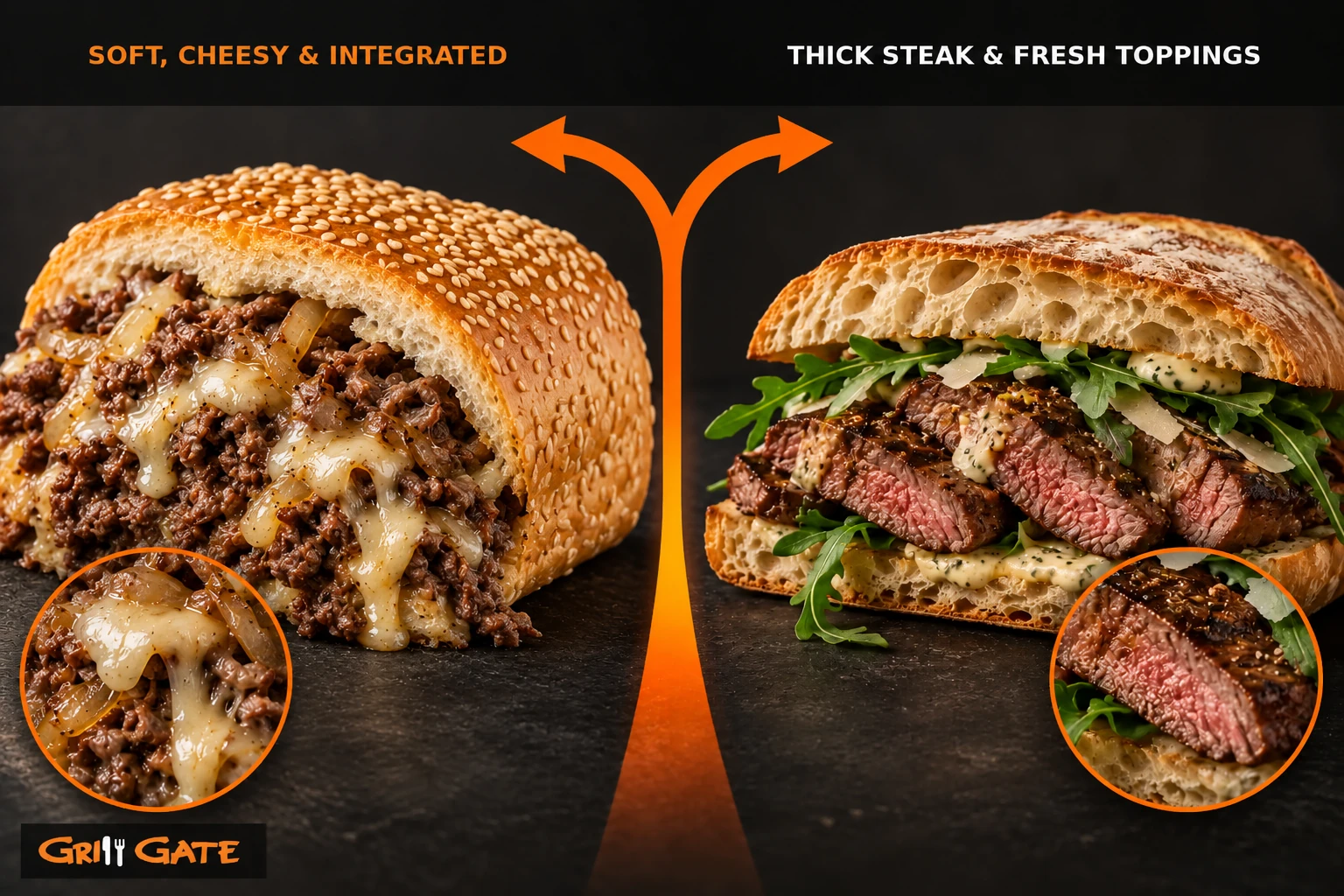
| Texture | Soft, juicy, cheesy and integrated | Can be firm, crusty, chunky or steak-forward |
| Toppings | Traditionally restrained | Almost unlimited |
| Identity | A recognizable regional sandwich | A general sandwich category |
What Is a Philly Cheesesteak?
A traditional Philly cheesesteak consists of thinly sliced or chopped beef cooked on a hot griddle, combined with melted cheese and placed inside a long roll. Sautéed onions are one of its best-known optional additions.
According to Visit Philadelphia’s guide to traditional cheesesteaks:
“A traditional cheesesteak … consists of sliced or chopped ribeye beef, melted cheese and optional sautéed onions on a soft-but-crusty long roll.”
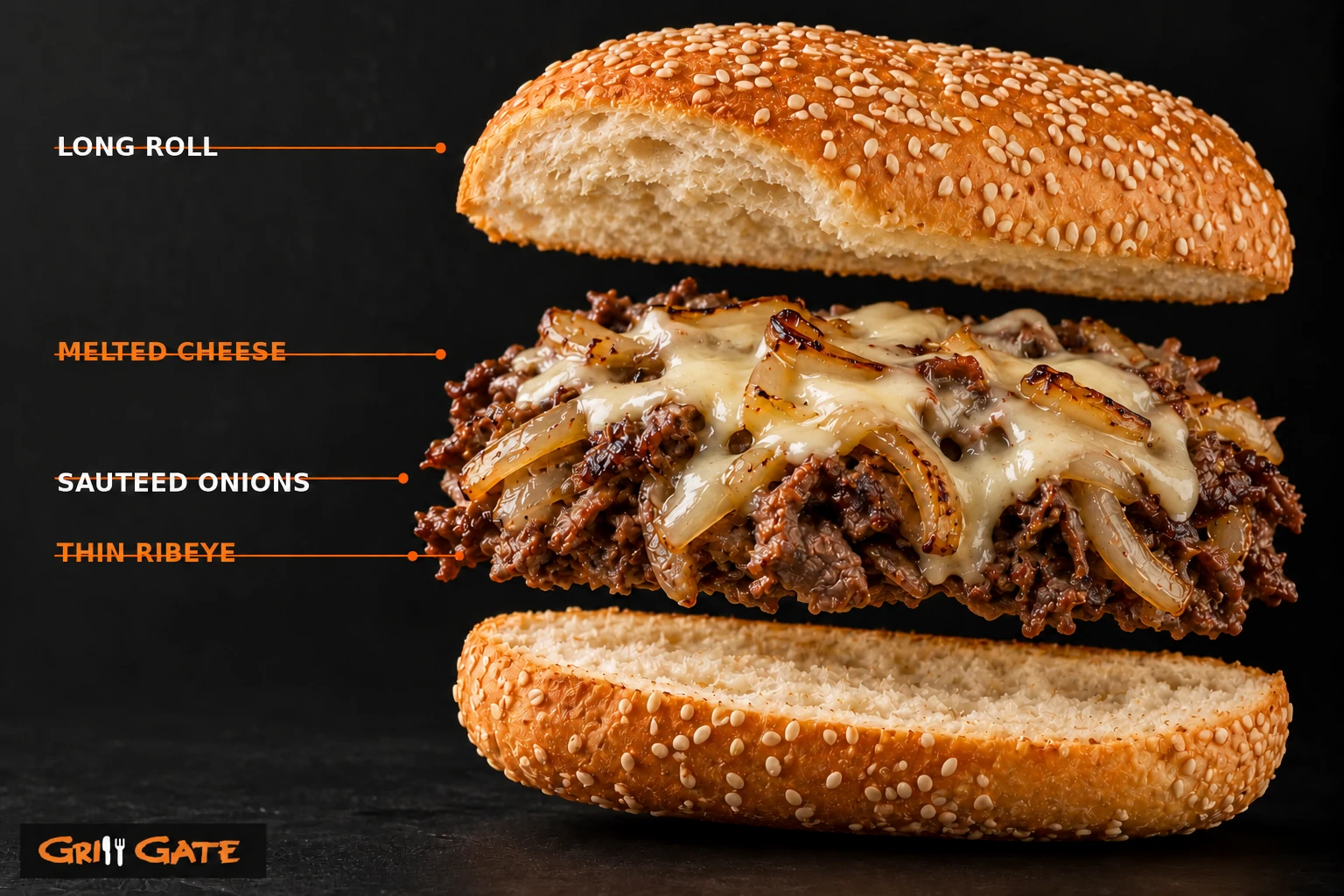
This short definition identifies the four elements that give the sandwich its character:
- Thinly sliced or chopped beef
- Melted cheese
- An elongated roll
- Optional sautéed onions
Peppers, mushrooms, bacon and sauces may be popular additions, but they are not required for a sandwich to be recognized as a Philly cheesesteak.
What Is a Steak Sandwich?
“Steak sandwich” is a much broader term. It generally describes any sandwich in which steak or sliced beef is the primary filling.
The beef could be:
- A whole grilled steak
- Sliced sirloin
- Chopped ribeye
- Thinly shaved beef
- Leftover roast steak
- Marinated steak strips
- Pulled or shredded beef in a less traditional interpretation
A steak sandwich might be served on ciabatta with arugula and garlic aioli, on a baguette with mustard, or on a sub roll with mushrooms and mozzarella. Cheese may be included, but it is not essential.
This flexibility is the main difference. A Philly cheesesteak follows a recognizable structure, while a steak sandwich can take many forms.
1. The Beef Is Prepared Differently
The preparation of the meat produces one of the clearest differences between the two sandwiches.
Beef in a Philly cheesesteak
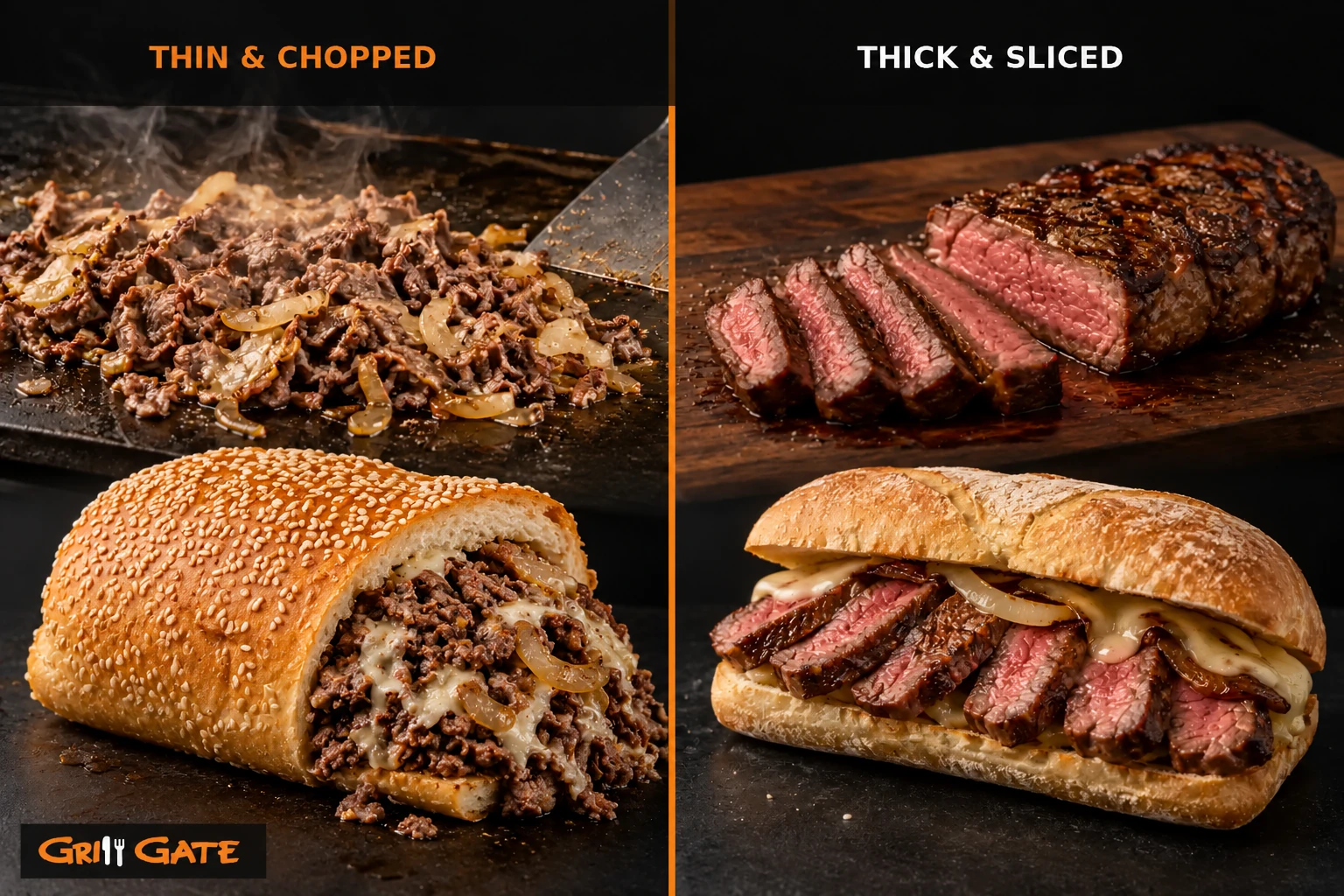
The beef is generally sliced very thinly or chopped as it cooks. Thin pieces cook quickly and create a tender filling that spreads evenly throughout the roll.
Because the meat is distributed rather than presented as one solid steak, each bite can contain beef, cheese and onions together.
Ribeye is traditionally associated with the sandwich because its marbling provides flavour and moisture during fast, high-heat cooking. Other cuts may be used by individual restaurants, but the meat still needs to remain tender after being sliced and griddled.
Beef in a steak sandwich
A general steak sandwich may contain thicker strips or even an intact steak. This creates a firmer, more distinctly meaty bite.
The meat may be cooked separately, rested and then sliced before being placed in the bread. That approach can produce a noticeable browned exterior and a pinker centre, depending on the cut and requested doneness.
The difference is therefore not merely the cut of beef. It is also the way the beef is sliced, cooked and incorporated into the sandwich.
2. Cheese Is Essential to One but Optional in the Other
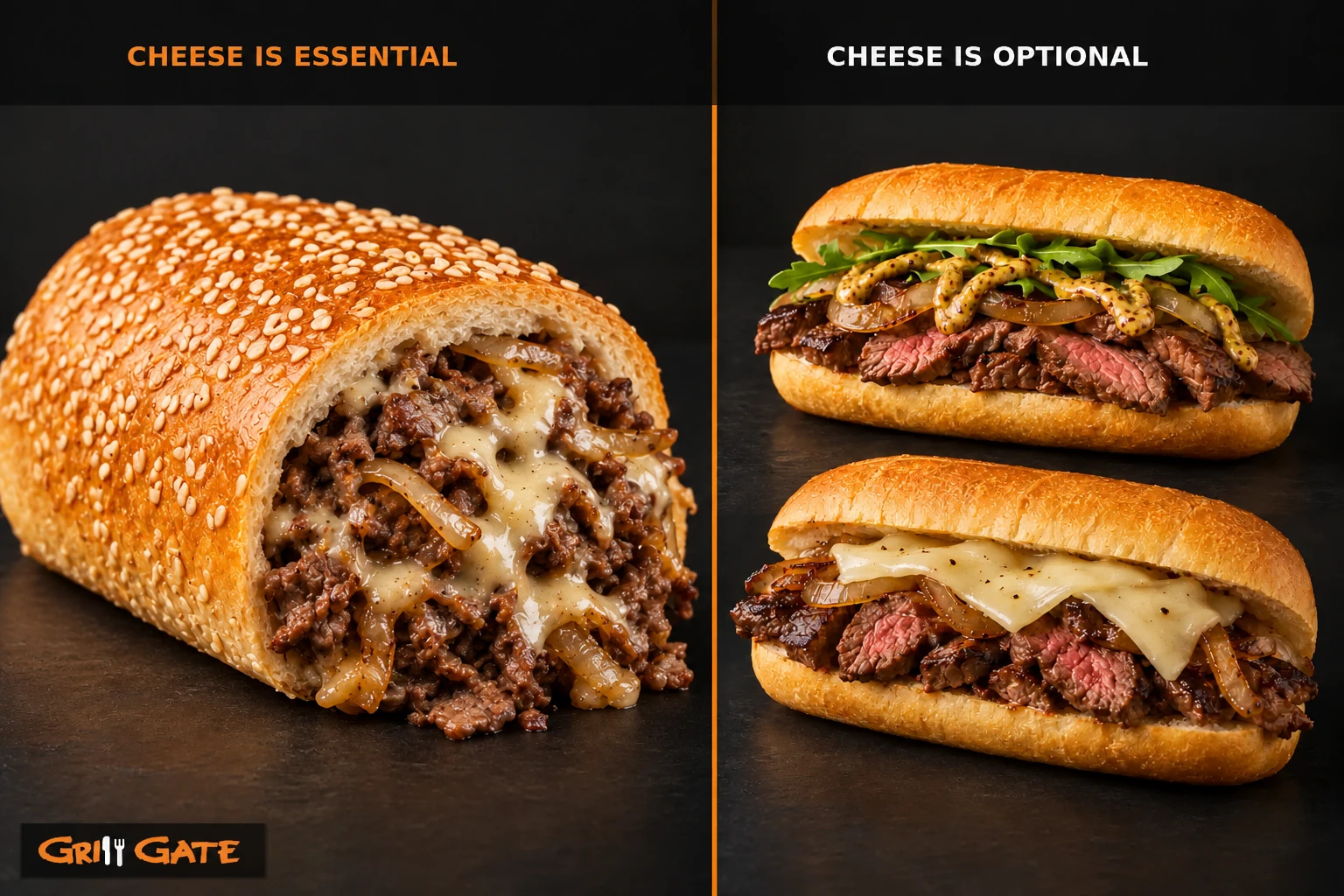
Cheese is part of the identity of a cheesesteak. Without cheese, the sandwich is more accurately described as a steak sandwich or “steak,” depending on local terminology.
Traditional Philadelphia cheese choices commonly include:
- Provolone
- American cheese
- Cheez Whiz
Each creates a different experience.
Provolone adds a more noticeable savoury flavour. American cheese produces a mild, creamy and consistent melt. Cheez Whiz creates a saucier and distinctly Philadelphia-associated version.
Restaurants outside Philadelphia may use mozzarella, cheddar, Cooper Sharp or a house cheese blend. These can produce an excellent sandwich, but they represent regional or restaurant-specific interpretations rather than the only traditional options.
A regular steak sandwich does not require cheese at all. It might instead rely on horseradish, mustard, chimichurri, garlic butter or another sauce to complement the beef.
3. The Bread Serves a Different Purpose
A cheesesteak needs a long roll that can absorb meat juices and melted cheese without immediately falling apart.
The ideal roll should be:
- Soft enough to compress around the filling
- Slightly crusty on the outside
- Strong enough to contain moisture
- Long enough to distribute the beef evenly
- Easy to bite without pushing the filling out
A steak sandwich has fewer structural rules. It might use ciabatta for a firm bite, a baguette for a crisp crust, sourdough for tanginess or a soft sandwich roll for comfort.
However, very tough bread can make a thick steak sandwich difficult to eat. When the bread requires more force to bite than the meat, the entire steak may pull out of the sandwich.
4. The Ingredients Are More Integrated in a Cheesesteak
In a Philly cheesesteak, the beef, cheese and onions are usually cooked or assembled so that they become a combined filling. Melted cheese surrounds the thin pieces of beef, while the onions are distributed through the sandwich.
A steak sandwich is often more layered:
- Bread
- Sauce
- Sliced steak
- Cheese
- Greens
- Tomato
- Pickled vegetables
- Top bread
This produces clearer separation between ingredients. One bite may contain more steak, while another contains more vegetables or sauce.
Neither approach is inherently better. Integration creates the soft, cohesive texture associated with cheesesteaks, while layering lets individual ingredients retain more of their original texture.
5. Onions Play a Special Role in a Philly Cheesesteak
Sautéed or griddled onions are strongly connected to Philadelphia cheesesteak culture, but they are not mandatory.
In Philadelphia ordering language:
- “Wit” means with onions.
- “Witout” means without onions.
You do not need to use this terminology outside Philadelphia. A clear request such as “with onions” or “without onions” works perfectly well.
Onions in a general steak sandwich have no special status. They may be raw, pickled, caramelized, grilled or omitted entirely.
If you want to understand the ordering process and the meaning of these choices, read our step-by-step guide to ordering a Philly cheesesteak.
6. Toppings Are Usually More Restrained on a Traditional Cheesesteak
A traditional cheesesteak keeps the main focus on beef, cheese, onions and bread. Additional toppings are variations rather than universal requirements.
Common additions include:
- Mushrooms
- Hot peppers
- Sweet peppers
- Roasted bell peppers
- Bacon
- Extra cheese
- Ketchup
- Mayonnaise or house sauce
A steak sandwich has no comparable topping formula. It may include arugula, tomato, avocado, pickled vegetables, fried egg, horseradish cream, barbecue sauce or chimichurri.
This greater freedom makes the regular steak sandwich a useful platform for experimentation. The cheesesteak, meanwhile, is easier to recognize when its core ingredients remain dominant.
Are Bell Peppers Part of a Traditional Philly Cheesesteak?
Bell peppers are frequently included in cheesesteaks served outside Philadelphia, but they are not one of the essential traditional ingredients.
The core combination is beef, cheese and a long roll, with onions optional. Peppers create a sweeter flavour and add tender vegetable texture, but their presence does not determine whether the sandwich is a cheesesteak.
This distinction matters because many restaurant versions labelled “Philly-style” use peppers and mushrooms as signature additions. These are interpretations of the sandwich rather than strict reproductions of the simplest Philadelphia version.
Can a Steak Sandwich Have Cheese?
Yes. Adding cheese to a steak sandwich does not automatically turn it into a Philly cheesesteak.
For example, a sandwich containing thick grilled steak, blue cheese, arugula and horseradish on ciabatta remains a steak sandwich. Its meat preparation, bread and overall structure are different from a traditional cheesesteak.
To resemble a Philly cheesesteak, the sandwich should have the recognizable combination of thinly sliced or chopped griddled beef, melted cheese and a long roll.
Which Sandwich Is Easier to Eat?
A properly made Philly cheesesteak is usually easier to bite because the meat is thin and distributed throughout the roll. The cheese also helps bind the filling together.
However, excessive cheese, sauce or toppings can make it messy. A weak roll may become soggy and split before the sandwich is finished.
A steak sandwich containing thick meat can require more effort to bite. If the steak is tough or sliced against the wrong direction, a whole section may pull out of the bread.
For either sandwich, good construction matters:
- The bread should match the weight of the filling.
- The meat should be tender enough to bite cleanly.
- Wet ingredients should be controlled.
- The filling should reach both ends of the bread.
- Every bite should contain a balanced amount of meat and supporting ingredients.
Which One Is More Filling?
Portion size matters more than the name of the sandwich.
A Philly cheesesteak can be particularly filling because it combines a substantial quantity of beef, melted cheese and bread. Adding mushrooms, bacon, peppers and sauce increases both richness and volume.
A steak sandwich can be lighter if it contains a modest portion of grilled steak and fresh vegetables. It can also be heavier if it uses a large steak, rich sauce and thick bread.
When comparing two options, look at:
- The weight of the beef
- The size of the bread
- The amount of cheese
- Added bacon or sauces
- Whether the meal includes fries or poutine
Philly Cheesesteak vs Steak Sandwich: Which Should You Choose?
Choose a Philly cheesesteak if you want:
- Thin, tender pieces of beef
- Melted cheese in almost every bite
- Sautéed onions
- A soft and cohesive filling
- A hearty comfort-food experience
- Meat and cheese integrated together
Choose a regular steak sandwich if you want:
- A more noticeable steak texture
- Thicker pieces of beef
- Greater control over doneness
- More bread and sauce choices
- Fresh greens or cold toppings
- A less cheese-focused sandwich
If you like beef but are unsure about a heavily cheesy meal, a steak sandwich may be the safer choice. If you want a rich, hot and fully integrated filling, choose the cheesesteak.
How Do Grill Gate’s Philly Steak Sandwiches Fit the Definition?
Grill Gate serves a house interpretation of the Philly cheesesteak rather than claiming to reproduce only the simplest Philadelphia formula.
The standard Philly Steak Sandwich is built with:
- 8 oz ribeye
- Mozzarella
- Sautéed onion
- Magic Mushroom
- Special sauce
This keeps the defining combination of thin steak, melted cheese and onions while introducing mozzarella, mushroom and special sauce as Grill Gate characteristics.
The Modified Philly Steak Sandwich adds roasted bell pepper for additional sweetness and vegetable flavour. The Smoky Bacon Philly Steak Sandwich adds bacon and a smokier profile for a richer meal.
The regular version is the most balanced starting point. The Modified version suits diners who prefer peppers, while the Smoky Bacon version is intended for those seeking the heaviest and boldest combination.
What Side Goes Best with Each Sandwich?
A side should balance the richness of the sandwich.
| Sandwich choice | Suitable side | Why it works |
|---|---|---|
| Classic cheesesteak | Crispy fries | Familiar crunch without changing the sandwich |
| Loaded cheesesteak | Salad | Freshness balances cheese, sauce and bacon |
| Simple steak sandwich | Fries or onion rings | Adds a crisp, salty component |
| Rich steak sandwich | Salad | Prevents the meal from becoming too heavy |
| Very hearty sandwich | No side or a small side | Keeps the overall portion manageable |
| Comfort-food meal | Poutine | Creates the richest possible combination |
You can compare fries, poutine and salads in our guide to the best sides for burgers and grilled sandwiches.
Where to Try a Grill Gate Philly Steak Sandwich
After deciding which style suits you, you can find Grill Gate’s Philly steak sandwiches at the following locations:
- Grill Gate Richmond Hill
- Grill Gate North York on Sheppard Avenue West
- Grill Gate North York on Yonge Street
- Grill Gate Aurora
The two North York branches are linked separately so readers can choose the correct location. Availability and ingredients may vary, so check the relevant location information before visiting.
EXPLORE GRILL GATE
See What’s on the Grill
Explore our burgers, Philly cheesesteaks, pizza, sides and more before choosing your favourite.
Final Verdict
The main difference between a Philly cheesesteak and a steak sandwich is specificity.
A steak sandwich is any sandwich primarily filled with steak. The meat can be thick or thin, cheese is optional, and the bread, toppings and sauces can vary widely.
A Philly cheesesteak is a recognizable type of steak sandwich made with thinly sliced or chopped griddled beef, melted cheese and a long roll, usually with the option of sautéed onions.
Choose the cheesesteak for a soft, cheesy and integrated comfort-food experience. Choose a steak sandwich when you want a firmer steak texture, more flexible toppings or less emphasis on melted cheese.
Frequently Asked Questions
Is a Philly cheesesteak the same as a steak sandwich?
Not exactly. A Philly cheesesteak is a specific type of steak sandwich. Regular steak sandwiches can use different cuts, breads, sauces and toppings and do not necessarily contain cheese.
Does a Philly cheesesteak always contain cheese?
Yes. Cheese is one of the ingredients that distinguishes a cheesesteak from a plain steak sandwich. Common traditional choices include provolone, American cheese and Cheez Whiz.
What meat is traditionally used in a Philly cheesesteak?
Thinly sliced or chopped ribeye is traditionally associated with the sandwich. Restaurants may use other cuts, but the meat should be tender and suitable for quick griddle cooking.
Does a traditional Philly cheesesteak contain peppers?
Peppers are a popular variation, particularly outside Philadelphia, but they are not required. The core ingredients are beef, melted cheese and a long roll, with sautéed onions optional.
Can a cheesesteak have mushrooms?
Yes. Mushrooms are a common addition, although they are not part of the minimum traditional formula.
Is a steak sandwich served with cheese?
It can be, but cheese is optional. A steak sandwich may instead use mustard, horseradish, garlic sauce, chimichurri or another condiment.
Which is better: a Philly cheesesteak or a steak sandwich?
Choose a Philly cheesesteak for thin beef, melted cheese and a cohesive filling. Choose a steak sandwich for a more noticeable steak texture and greater flexibility in bread, sauce and toppings.