
Richmond Hill has no single “best” burger for every appetite. A crisp-edged smash burger, a thick gourmet patty and a flame-grilled cheeseburger deliver very different experiences—even when they use similar ingredients.
The better question is: which burger style matches what you want today? This guide explains how to compare patties, buns, cheese, toppings and sides so you can recognize a well-built burger and order with confidence.
Quick answer: Choose a smash burger for maximum crust, a thick patty for a juicier and meatier bite, or a charbroiled burger for smoky grilled flavour. Then match the bun, cheese and toppings to the patty instead of simply adding more of everything.
Start with the Burger Style
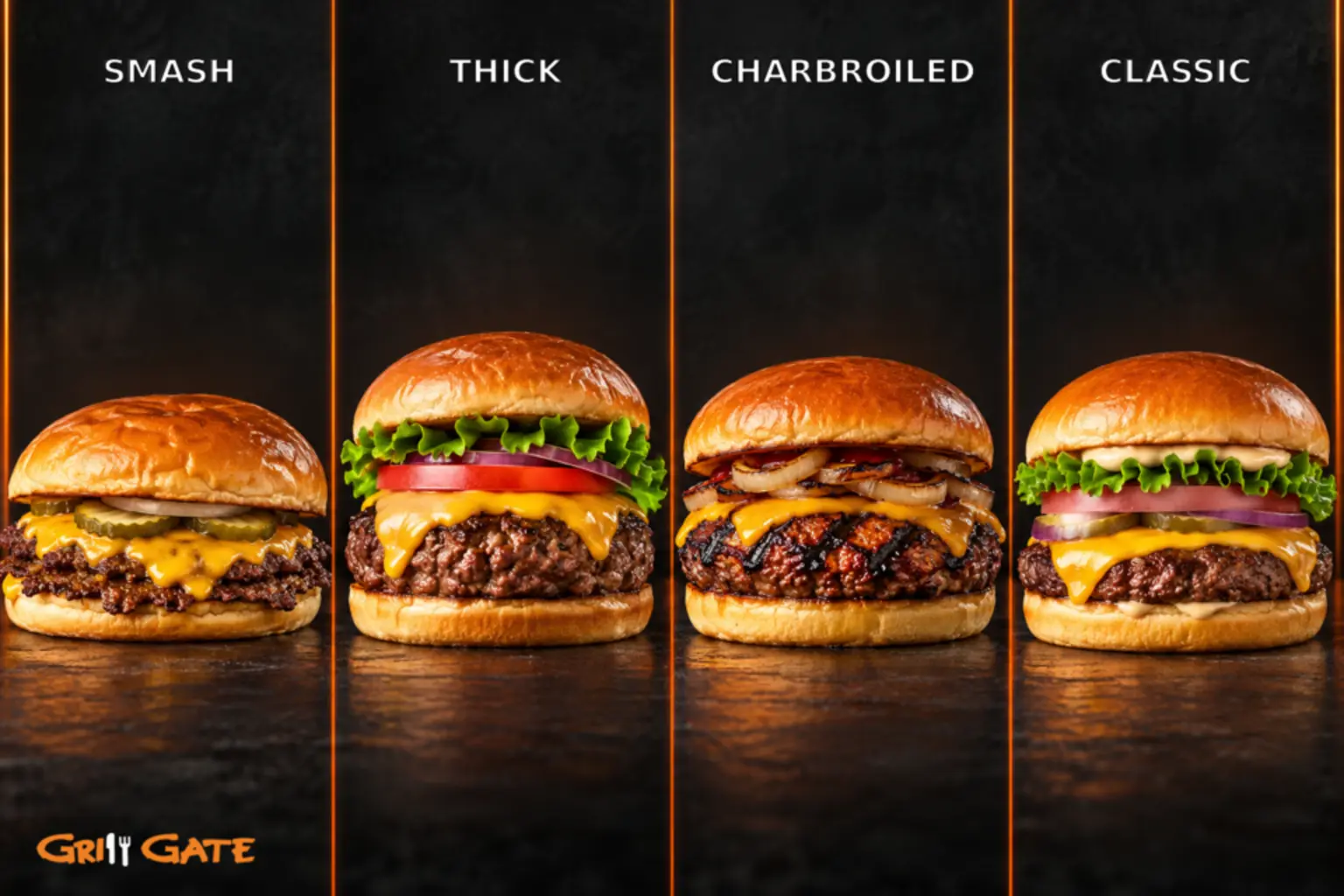
The cooking method shapes the burger more than almost any topping. Before comparing restaurants or combinations, decide which texture and flavour profile you actually want.
| Burger style | What defines it | Best for | Watch for |
|---|---|---|---|
| Smash burger | A thin beef ball pressed onto a very hot flat surface | Crisp edges, deep browning and a higher crust-to-meat ratio | A patty that steams instead of developing a dark crust |
| Thick burger | A substantial patty cooked without heavy pressing | A juicy centre and a pronounced beef flavour | A weak sear, uneven cooking or a bun that cannot support the patty |
| Charbroiled burger | A patty cooked over an open flame or grill | Smoky aroma and grilled flavour | Excessive charring that masks the beef |
| Classic cheeseburger | A balanced patty, melting cheese, pickles, onions and sauce | Familiar flavour and easy eating | Too many toppings or too much sauce |
Thick or Thin: Which Patty Fits Your Craving?
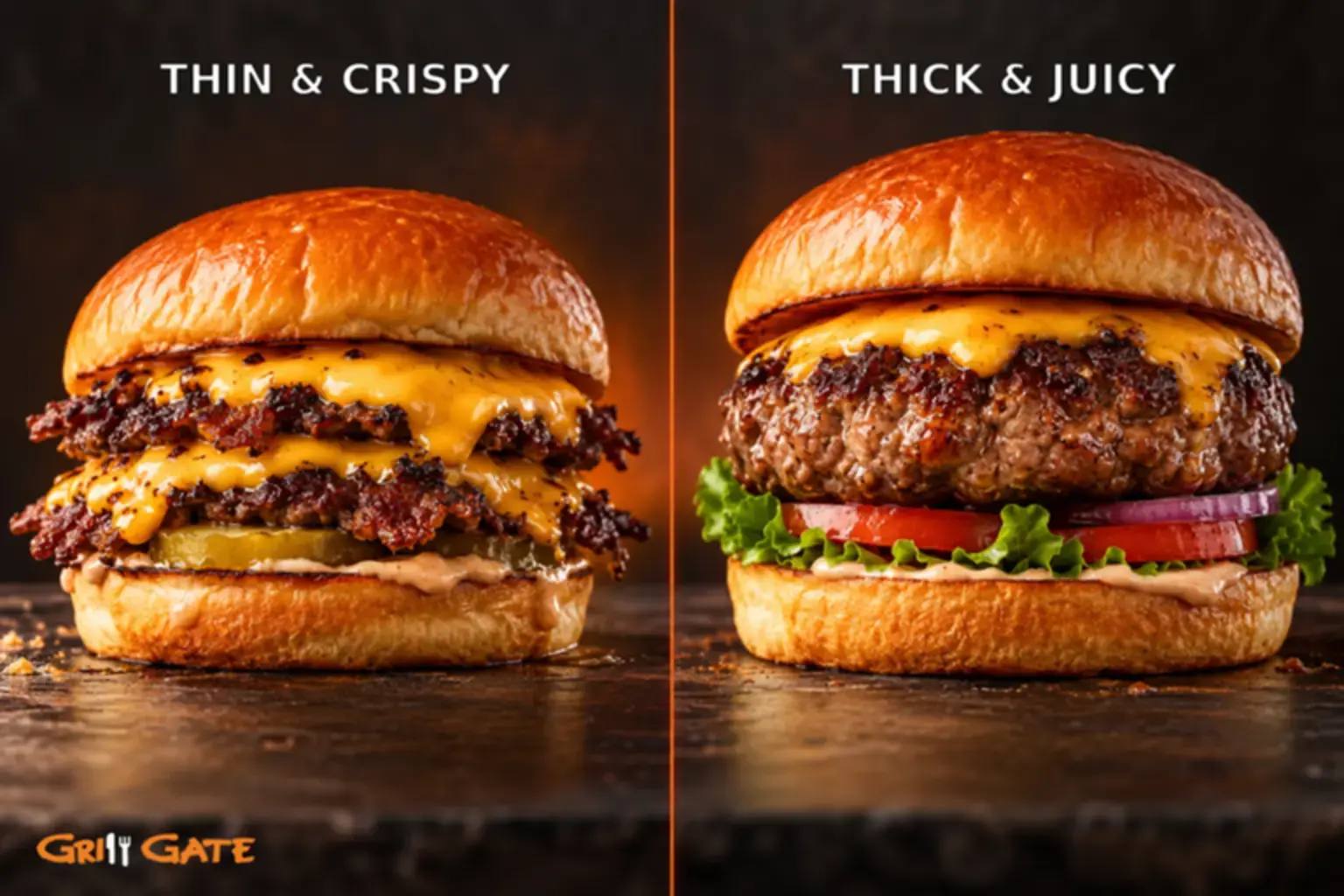
A thin patty creates more contact with the hot cooking surface. That means more browned crust in every bite. Two thin patties can also hold cheese between the layers, giving the burger a rich flavour without requiring an oversized centre.
A thick patty changes the experience. It offers a meatier bite, retains more juice in the centre and gives the beef a larger role than the toppings. It also needs a stronger bun and careful cooking so the centre and exterior are both satisfying.
Choose a thin or smash-style burger when you want:
- crisp, lacy edges;
- a strong seared flavour;
- melted cheese in nearly every bite; or
- a burger that is easier to eat quickly.
Choose a thick burger when you want:
- a substantial, steak-like bite;
- a juicier centre;
- fewer toppings with more focus on the beef; or
- a gourmet burger that feels like a full meal.
Our [thick vs. thin burger patty guide](/blog/thick-vs-thin-burger-patties/) explains the trade-offs in more detail. If you are considering a larger patty, read [what makes an 8 oz gourmet burger different](/blog/8-oz-gourmet-burger/).
Five Signs of a Well-Built Burger
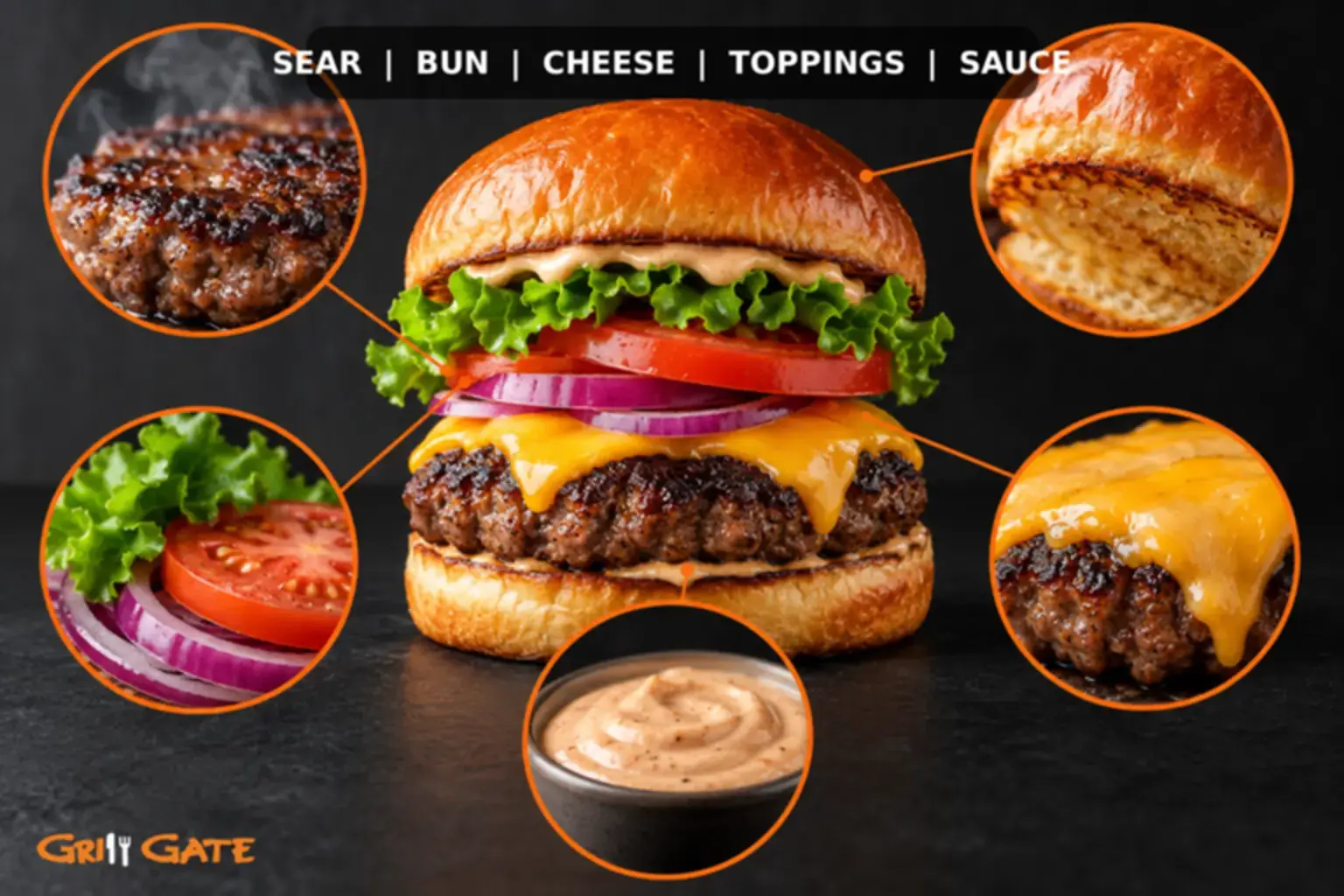
1. The patty has real browning
A good sear adds savoury depth and contrast. On a smash burger, look for a dark, crisp edge rather than a soft grey surface. On a thick or grilled burger, the exterior should be browned without tasting burnt.
2. The bun matches the filling
The bun is structural, not decorative. It should be soft enough to compress but sturdy enough to hold the juices and sauce through the final bite.
- Brioche adds richness and works well with savoury or spicy combinations.
- Potato buns are soft, flexible and especially suited to smash burgers.
- Sesame buns provide a familiar flavour and enough structure for classic cheeseburgers.
Use our [burger bun guide](/blog/burger-bun-types/) to compare brioche, potato and sesame buns.
3. The cheese melts into the burger
Cheese should connect the patty to the other ingredients rather than sit on top as a cold layer. American cheese melts smoothly and suits smash burgers; cheddar brings a sharper flavour to thick beef patties; Swiss works well with mushrooms and caramelized onions.
See our guide to [American, cheddar, Swiss and other burger cheeses](/blog/burger-cheese-types/) for more pairing ideas.
4. The toppings have a purpose
The most effective toppings add one or two missing qualities:
- pickles add acidity;
- raw onions add sharpness and crunch;
- caramelized onions add sweetness;
- lettuce adds freshness;
- bacon adds salt and crisp texture;
- jalapeños add heat;
- mushrooms add earthy, savoury depth.
More toppings do not automatically create a better burger. A balanced combination is usually easier to taste—and easier to eat. Our [best burger toppings guide](/blog/best-burger-toppings/) includes both classic and gourmet combinations.
5. The sauce supports the patty
Sauce should provide moisture and contrast without hiding the beef or soaking the bun. A tangy burger sauce complements rich cheese, spicy mayo works with milder toppings, and barbecue sauce fits smoky patties when used with restraint.
Choose by Flavour, Not Just by Size
Use this quick decision guide when you are unsure what to order:
| If you want… | Start with… | Add… | Avoid… |
|---|---|---|---|
| Crisp and savoury | Double smash patties | American cheese, pickles and onions | Heavy wet toppings |
| Juicy and beef-forward | Thick patty | Cheddar, grilled onions and a restrained sauce | Too many competing toppings |
| Smoky and bold | Charbroiled patty | Bacon, cheddar, jalapeños or barbecue sauce | Excessively sweet combinations |
| Rich and gourmet | Thick patty on brioche | Swiss, mushrooms and caramelized onions | A fragile bun |
| Fresh and balanced | Classic patty | Lettuce, tomato, pickles and a tangy sauce | Too much cheese or sauce |
Think About Dine-In, Takeout and Delivery
The best choice can change depending on where you plan to eat it.
For dine-in, crisp-edged patties and delicate toppings arrive at their best. For takeout or delivery, structure matters more. A sturdy toasted bun, restrained sauce and toppings placed away from the bottom bun help the burger travel without becoming soggy.
If the trip will take time, consider ordering sauce on the side. Fries are most sensitive to trapped steam, while poutine and sauced sides have different travel considerations. Compare the options in our guide to the [best sides for burgers](/blog/best-sides-for-burgers/).
FRESH OFF THE GRILL
Craving Grill Gate?
Order your favourite burgers, Philly cheesesteaks, pizza and more online from Grill Gate.
Doneness and Food Safety Matter
Visual colour alone is not a reliable safety check for ground beef. FoodSafety.gov advises: “Cook to the right temperature” and recommends using a food thermometer. Its safe-temperature guidance lists ground beef at 160°F (71°C). Read the official food-safety guidance.
For restaurant diners, the practical takeaway is simple: a burger should be properly cooked while remaining thoughtfully seasoned and juicy. Juiciness comes from the meat, fat balance and cooking technique—not from serving ground beef below a safe temperature.
What Should You Order for Different Occasions?
A quick lunch
Choose a single or double smash burger with a simple topping combination. It is compact, flavourful and usually easier to eat without a knife.
A substantial dinner
A thick or 8 oz burger with a strong bun makes more sense when the burger is the centre of the meal. Pair it with a side that adds contrast rather than more heaviness.
A family or group order
Select a few recognizable base styles and let each person adjust heat, cheese and toppings. Keeping sauces on the side can also protect the buns during transport.
A first visit
Begin with a restaurant’s signature or classic cheeseburger. A straightforward build makes it easier to judge the patty, sear, bun and balance before trying a heavily loaded option.
Common Ordering Mistakes
- Choosing only by patty size: cooking style and balance matter as much as weight.
- Adding every premium topping: too many strong flavours can bury the beef.
- Ignoring bun structure: a delicious filling still fails if the bun collapses.
- Using the same cheese for every style: melt, sharpness and texture affect the final result.
- Overlooking travel time: the ideal dine-in burger may not be the best delivery burger.
- Ordering sides without contrast: a rich burger often benefits from acidity, freshness or crunch.
Frequently Asked Questions
What burger style has the crispiest edges?
A smash burger usually produces the crispiest edges because the thin patty makes broad contact with a very hot flat cooking surface.
Is a thick burger always juicier than a thin burger?
Not automatically. A thick patty can retain more juice in its centre, but meat quality, fat content, heat management and cooking time all affect the result.
Which bun is best for a burger?
There is no universal winner. Potato buns work especially well with smash burgers, brioche suits rich gourmet combinations, and sesame buns are a reliable choice for classic cheeseburgers.
Which cheese melts best on a burger?
American cheese melts most evenly. Cheddar provides a stronger flavour, while Swiss is a good match for mushrooms and onions.
How can I keep a takeout burger from becoming soggy?
Choose a toasted, sturdy bun; avoid excessive sauce; request sauce on the side when possible; and eat the burger soon after pickup.
Where can I try a burger in Richmond Hill?
Once you know which style suits your craving, visit the Grill Gate Richmond Hill location for location-specific details, availability and ordering information.
The Bottom Line
Finding a great burger in Richmond Hill is less about accepting a universal ranking and more about matching the burger to your preferred texture, flavour and occasion. Start with the patty style, choose a bun that can support it, add cheese and toppings with purpose, and consider whether you will eat it immediately or take it home.
When every component has a clear job, the burger tastes better—not because it contains more, but because it is properly balanced.