
Some burger lovers want a thick, juicy patty with a substantial bite. Others prefer a thin patty with crisp edges, a deeply browned crust and melted cheese in every layer.
So, which style makes the better burger?
The short answer is that thick burger patties are best for a juicy, beef-forward experience, while thin patties are better if you enjoy more browning, crisp edges and a higher crust-to-meat ratio. Neither style is automatically superior—the right choice depends on the texture, flavour and overall burger experience you want.
If you are still exploring the wider world of burgers, our guide to the different types of burgers is a useful place to start.
Thick vs Thin Burger Patties at a Glance
| Feature | Thick Burger Patty | Thin Burger Patty |
|---|---|---|
| Main attraction | Juicy, meaty centre | Browned crust and crispy edges |
| Beef flavour | Deep and prominent | Intense roasted flavour |
| Texture | Tender and substantial | Crisp around the edges |
| Cooking time | Longer | Very quick |
| Best cooking surface | Grill or flat-top | Hot flat-top or griddle |
| Cheese ratio | Balanced and subtle | Cheese in almost every bite |
| Toppings | Can support rich, substantial toppings | Best with simple, balanced toppings |
| Best for | A steakhouse-style or gourmet burger | A smash-style or classic diner burger |
What Is Considered a Thick Burger Patty?
A thick patty is formed with enough height to preserve a noticeable centre after cooking. Instead of being dominated by its surface crust, it offers two distinct experiences: a browned exterior and a softer, juicier interior.
Thick patties are closely associated with gourmet and steakhouse-style burgers. Because there is more beef in each patty, the quality, seasoning and texture of the meat become especially important.
An 8 oz patty is a classic example of this substantial style. If you want to understand why patty weight makes such a difference, read our guide to what makes an 8 oz gourmet burger different.
What Is Considered a Thin Burger Patty?
A thin burger patty spreads the beef across a wider cooking surface. This creates more direct contact between the meat and the hot grill or griddle.
The result is a higher proportion of browned exterior in every bite.
Some thin patties are shaped before cooking, while smash-style patties begin as loosely formed balls of beef that are pressed onto a very hot surface. These terms are related, but they are not interchangeable: every smash burger has a thin patty, but not every thin patty is a smash burger.
For a closer look at how the cooking methods compare, visit our guide to grilled burgers vs smash burgers.
Flavour: Beefiness or Browning?
Thickness changes where a burger’s flavour comes from.
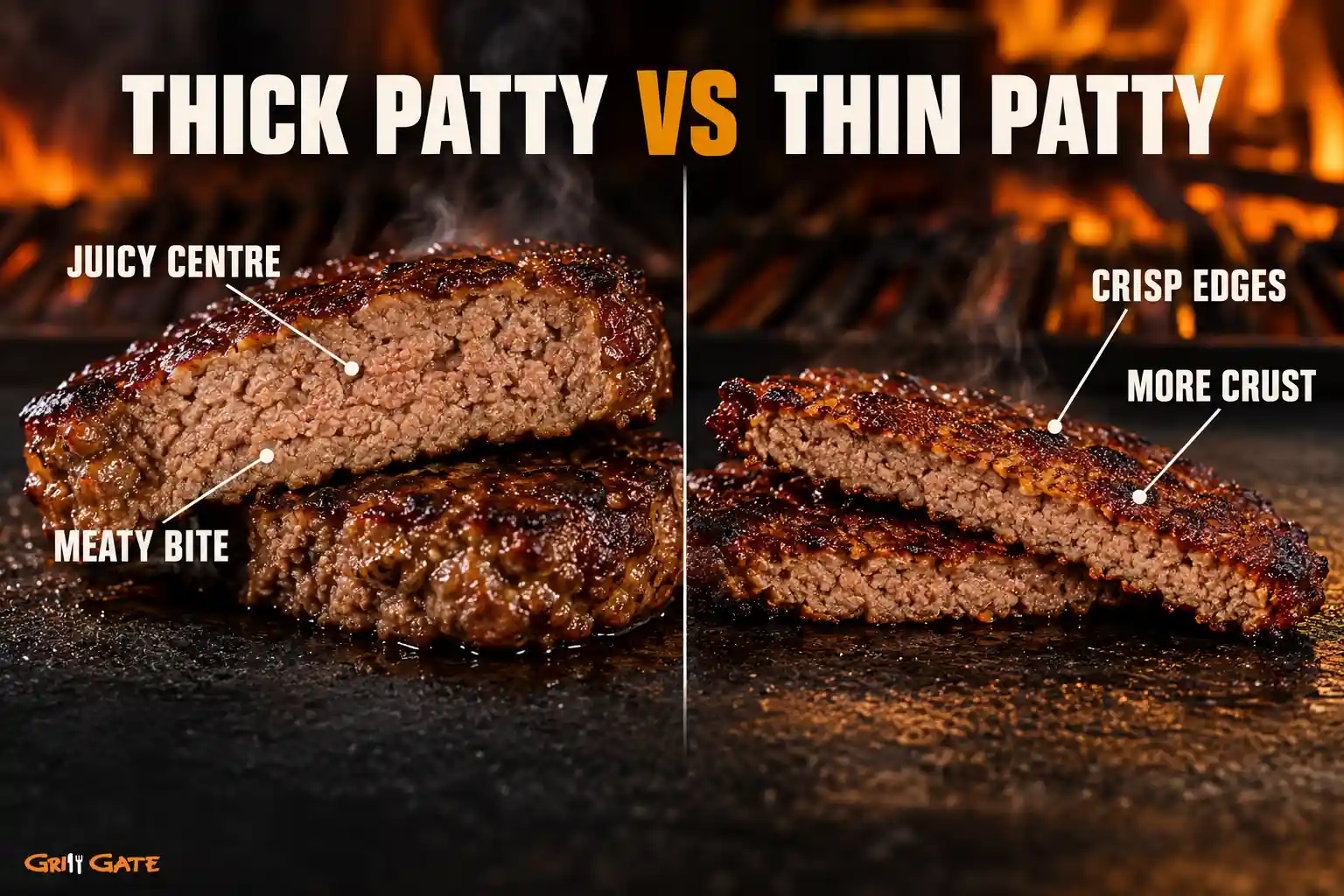
A thick patty puts the beef itself at the centre of the experience. Its outer crust provides savoury flavour, but the substantial interior gives each bite a tender, rich and distinctly meaty character.
A thin patty gets more of its personality from browning. Because a greater percentage of the meat touches the hot cooking surface, you receive more roasted flavour and crisp texture relative to the amount of beef.
Choose a thick patty if you want:
- A strong, beef-forward taste
- A substantial and satisfying bite
- Contrast between the browned exterior and tender centre
- A gourmet or steakhouse-style burger
Choose a thin patty if you want:
- Maximum browned flavour
- Crisp, irregular edges
- A higher crust-to-meat ratio
- A classic diner or smash-burger experience
Which Patty Is Juicier?
A properly cooked thick patty generally produces a more noticeably juicy interior. Its centre is protected from direct heat for longer, allowing it to retain a tender texture while the outside develops colour.
However, thickness alone does not guarantee juiciness.
A thick patty can become dry if it is overcooked, while a thin patty can still taste rich and satisfying when it is cooked quickly and served immediately. Fat content, cooking temperature, handling and resting time all affect the final result.
Thin patties do not usually have a large, juicy centre. Their appeal comes from a different combination: crispy beef, melted cheese and sauce working together in each bite.
Which Patty Has the Better Crust?
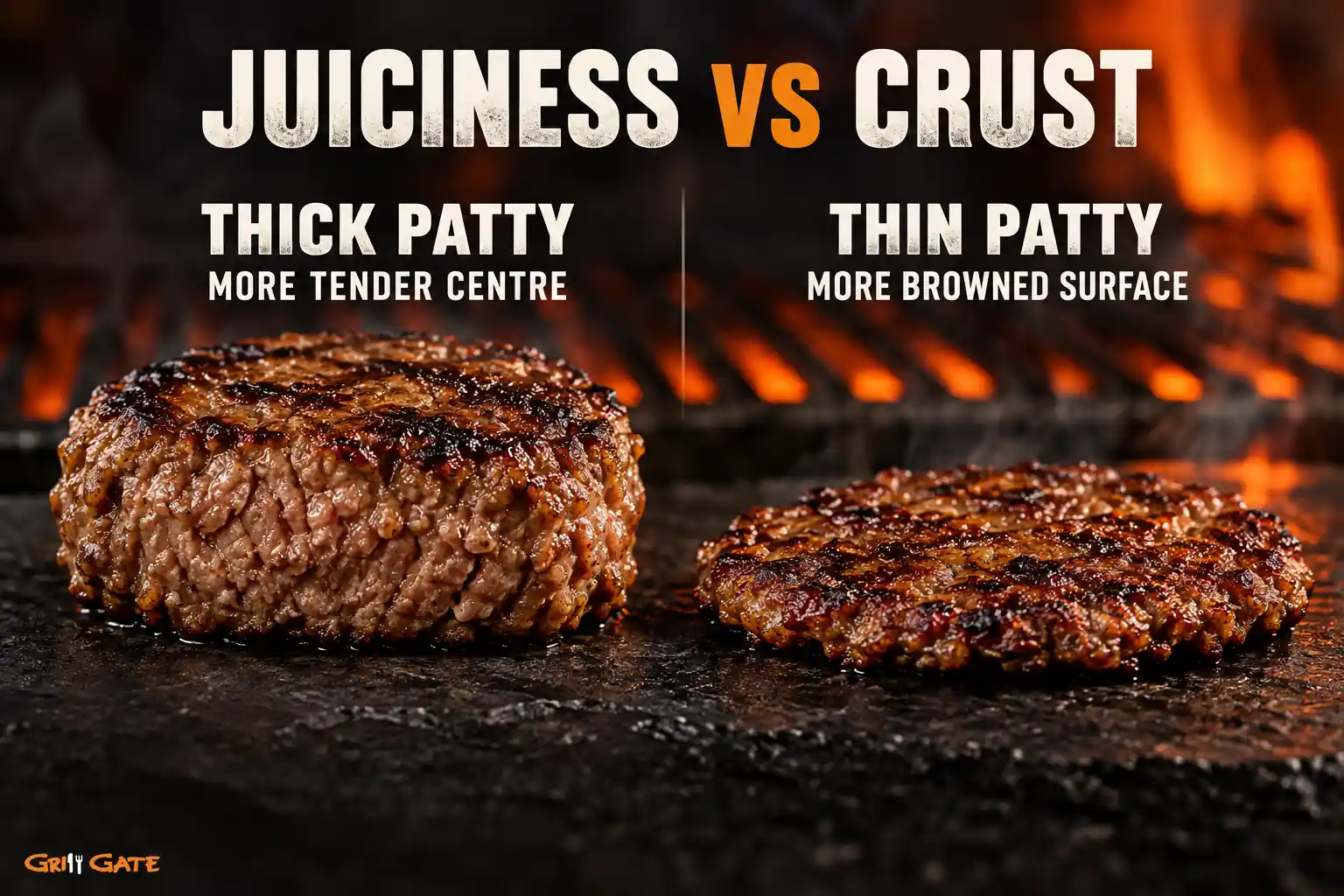
If crust is your priority, the thin patty has the advantage.
When loosely packed beef is pressed against a very hot griddle, more of its surface makes direct contact with the metal. This encourages rapid browning and creates the lacy, crisp edges associated with a good smash burger.
A thick patty can still develop an excellent crust, especially over high heat. But because it has less cooking surface relative to its volume, the browned exterior represents a smaller part of each bite.
This creates a simple distinction:
- Thin patties emphasize crust.
- Thick patties emphasize the contrast between crust and centre.
How Patty Thickness Changes the Role of Cheese
Cheese behaves differently on each style of burger.
A single slice of cheese on a thick patty adds creaminess without hiding the flavour or texture of the beef. Stronger or layered cheeses can also work because the substantial patty gives them enough meat to balance against.
With thin patties, cheese becomes a bigger part of the burger’s structure. It melts around the crisp beef and helps connect multiple patties when they are stacked. A double thin-patty cheeseburger may therefore taste cheesier than a burger containing a similar total amount of beef in one thick patty.
The presence of cheese also determines whether the sandwich is technically a hamburger or cheeseburger. Our guide to hamburgers vs cheeseburgers explains the distinction in more detail.
Which Style Works Better with Toppings?
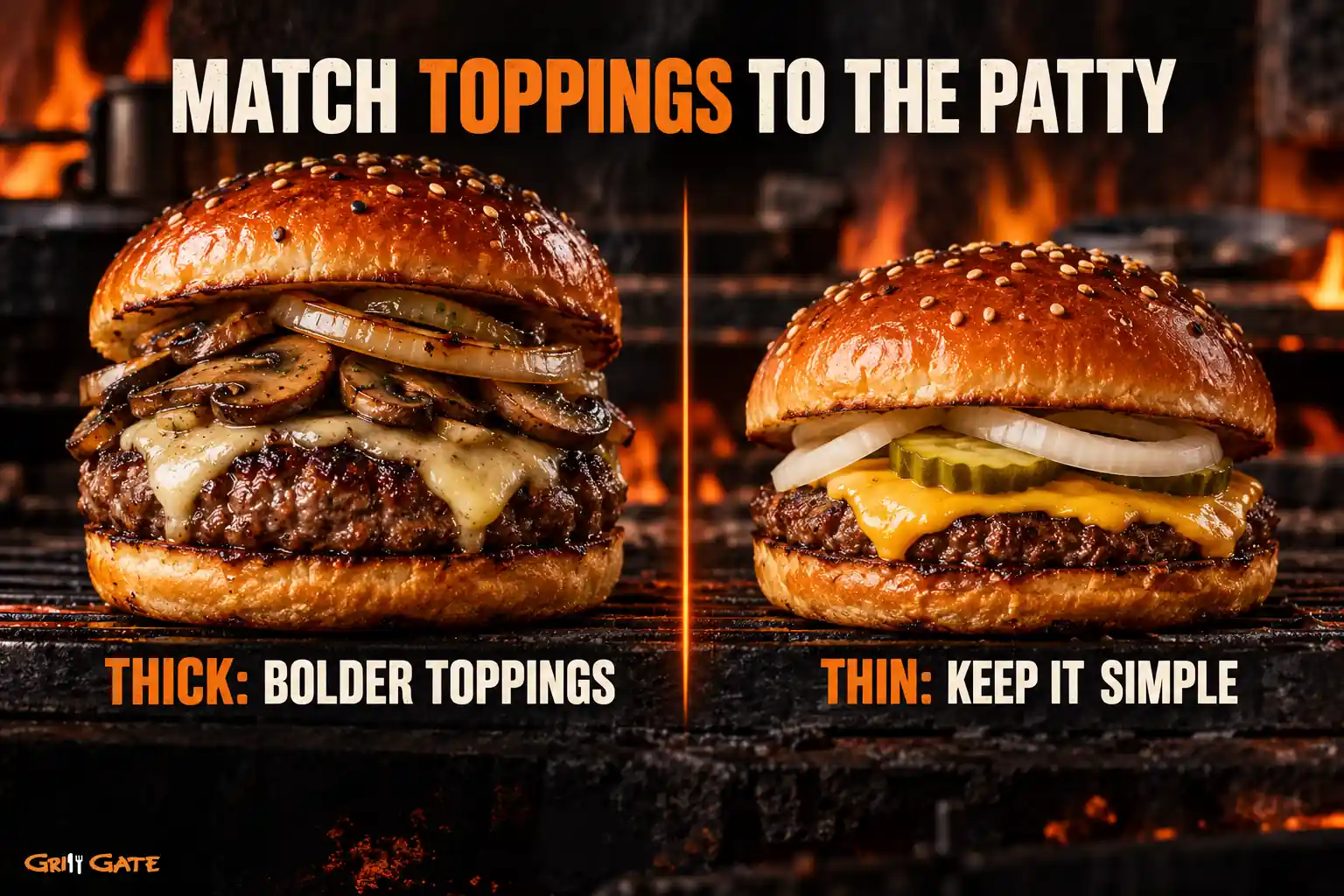
Thick patties can support bolder toppings
A substantial patty is less likely to disappear beneath mushrooms, grilled peppers, eggs, guacamole or multiple cheeses. Its beefy flavour gives the burger a strong foundation.
However, even a large burger needs balance. Too many heavy toppings can make the sandwich difficult to eat and prevent the flavour of the beef from coming through.
Thin patties benefit from restraint
Thin patties usually work best with fewer toppings. Cheese, pickles, onions and a well-balanced sauce can complement the crisp beef without overwhelming it.
If a thin patty is buried under several wet or bulky ingredients, its crust can soften and its distinctive texture may be lost.
The best toppings are not necessarily the largest number of toppings. They are the ingredients that support the patty style.
Which Patty Is Easier to Cook?
Thin patties cook faster, but the process leaves little room for hesitation. The cooking surface must be properly heated, and the cook needs to work quickly before the meat becomes dry.
Thick patties take longer and require more control. The exterior needs enough heat to brown, but the centre must also reach a safe temperature without the outside burning.
For food safety, Health Canada advises cooking ground meat—including burgers—to an internal temperature of 71°C (160°F). Its guidance summarizes the recommendation as:
“Ground meat, for example, burgers, meatballs, sausages: 71°C (160°F).”
Use a digital food thermometer rather than relying only on colour. A thick patty should be checked from the side so the probe reaches its centre. Review Health Canada’s safe cooking temperature guidance.
Single Thick Patty or Double Thin Patties?
This choice is about more than the total amount of beef.
Imagine two burgers containing roughly the same quantity of meat:
- One uses a single thick patty.
- The other divides the beef between two thin patties.
The single thick patty offers more tender interior and a pronounced, meaty bite. The double thin-patty burger creates twice as many browned surfaces and allows cheese to melt between the layers.
That means the experience changes even when the amount of beef remains similar:
- Choose one thick patty for juiciness and a substantial centre.
- Choose two thin patties for extra crust, cheese and layered texture.
Thick vs Thin Patties: Which One Should You Choose?
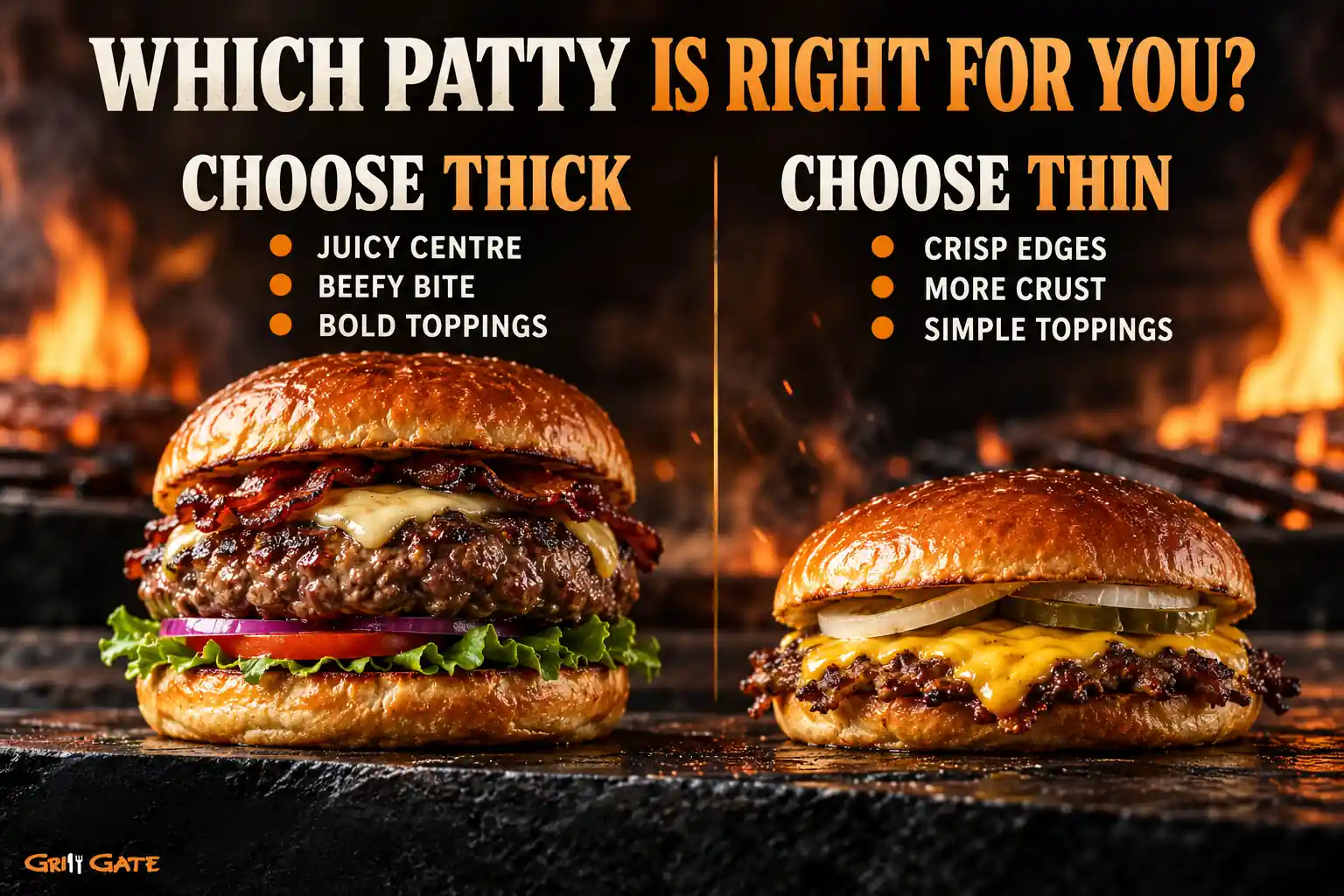
Choose a thick burger patty if you:
- Want the beef to be the dominant flavour
- Prefer a juicy, tender centre
- Enjoy gourmet or steakhouse-style burgers
- Like substantial toppings
- Want one large patty rather than multiple layers
Choose a thin burger patty if you:
- Prefer crisp edges and deep browning
- Enjoy smash burgers or diner-style cheeseburgers
- Want cheese in nearly every bite
- Prefer simple toppings
- Like the texture of stacked patties
Still undecided? Use this shortcut:
Choose thick for juiciness. Choose thin for crust.
Why Grill Gate Builds Its Gourmet Burgers Around an 8 oz Patty
At Grill Gate, the substantial 8 oz beef patty supports the kind of bold, satisfying burger experience associated with a gourmet build. Its size allows the beef to remain central even when paired with ingredients such as cheddar, mozzarella, mushrooms, grilled peppers, guacamole or crispy onion chips.
The goal is not simply to make a burger larger. A successful thick-patty burger needs balance between the beef, bun, cheese, toppings and sauce so that no single component overwhelms the others.
You can experience Grill Gate’s gourmet burgers at our locations in:
The Final Verdict
There is no universal winner in the thick vs thin burger debate because the two styles deliver different experiences.
A thin patty maximizes contact with the cooking surface, producing more browning, crisp edges and roasted flavour. A thick patty provides a more substantial bite, a tender centre and a stronger focus on the beef itself.
If you crave a crispy, cheesy and fast-cooking burger, choose thin. If you want a juicy, beef-forward gourmet burger, choose thick.
The best patty is ultimately the one that delivers the texture and flavour you enjoy most.
Frequently Asked Questions
Are thick burger patties better than thin patties?
Not necessarily. Thick patties are better for a juicy centre and substantial bite, while thin patties are better for crisp edges and a higher proportion of browned crust.
Are smash burgers always made with thin patties?
Yes. Smashing the beef against a hot cooking surface creates a thin patty. However, not every thin patty is a smash burger because some are shaped thin before cooking rather than smashed on the griddle.
Is one thick patty better than two thin patties?
One thick patty provides more tender interior, while two thin patties provide more browned surface and space for cheese between the layers. The better option depends on whether you prioritize juiciness or crust.
Do thick burger patties take longer to cook?
Yes. Heat must travel farther to reach the centre of a thick patty, so it generally takes longer to cook than a thin patty.
What temperature should a beef burger reach?
According to Health Canada, ground-beef burgers should reach an internal temperature of 71°C (160°F). Use a digital food thermometer to check the centre of the patty.
What toppings work best on a thick burger?
Thick patties can support substantial toppings such as mushrooms, grilled onions, peppers, eggs, guacamole and layered cheese. The best combination still needs balance so the flavour of the beef remains noticeable.