
Grilled burgers and smash burgers may use similar ingredients, but they deliver noticeably different eating experiences. A grilled burger usually features a thicker, pre-shaped patty with a juicy centre and visible grill marks. A smash burger is pressed thin against a very hot flat cooking surface, creating a deeply browned crust and crispy edges.
So, which one should you choose? A grilled burger is generally better if you enjoy a substantial, meaty bite, while a smash burger suits diners who prefer maximum browning, crisp edges and a higher crust-to-meat ratio.
If you are still exploring the wider burger world, start with our guide to the main types of burgers.
Grilled Burger vs Smash Burger at a Glance
| Feature | Grilled Burger | Smash Burger |
|---|---|---|
| Patty shape | Formed before cooking | Pressed directly on the cooking surface |
| Typical thickness | Medium to thick | Thin |
| Cooking surface | Usually a grill grate | Flat-top griddle or heavy skillet |
| Exterior | Grill marks and light charring | Full-surface brown crust |
| Centre | Substantial and juicy | Thin and fully cooked |
| Edges | Soft or lightly charred | Crisp and irregular |
| Main flavour | Beef-forward and smoky | Deeply browned and savoury |
| Common build | One substantial patty | One or more thin stacked patties |
| Best for | A thick, meaty bite | Crispy texture and strong seared flavour |
The biggest difference is not the seasoning, cheese or toppings. It is how the beef patty is shaped and cooked.
What Is a Grilled Burger?
A grilled burger is made from a formed patty placed on a heated grill. The patty keeps most of its original thickness while it cooks and is normally flipped without being flattened.
Because the meat touches the grill in specific places rather than across its entire surface, it develops grill marks and areas of char. At the same time, the thicker centre provides a more substantial texture.
Depending on the grill, the burger may also pick up a light smoky flavour from the heat, drippings and open cooking environment.
A grilled burger is usually the better choice for diners who want:
- A thicker and more filling patty
- A noticeable beef texture
- A juicy centre
- Grill marks and lightly charred flavour
- A burger that can support generous toppings
The phrase “grilled burger” describes the cooking method. It does not refer to one specific recipe, topping combination or type of cheese.
What Is a Smash Burger?
A smash burger starts as a loosely formed ball of ground beef rather than a finished patty. The beef is placed on a very hot flat-top griddle or skillet and immediately pressed into a thin layer.
Pressing the meat creates more direct contact between the beef and the hot surface. That expanded contact area produces the dark brown crust associated with smash burgers.
A properly prepared smash burger should have:
- A thin patty
- Deep surface browning
- Crispy, irregular edges
- A savoury seared flavour
- A compact build that is easy to stack
Smash burgers are commonly served as doubles because each patty is relatively thin. Stacking also creates additional layers for cheese, sauce and onions.
The important detail is timing. A smash burger is pressed at the beginning of cooking. Repeatedly pressing a thicker burger after it has started cooking is not the same technique and may force moisture and rendered fat out of the patty.
How Are Grilled and Smash Burgers Cooked Differently?
The cooking surface creates one of the clearest differences between grilled and smash burgers.
Grilled burger cooking method
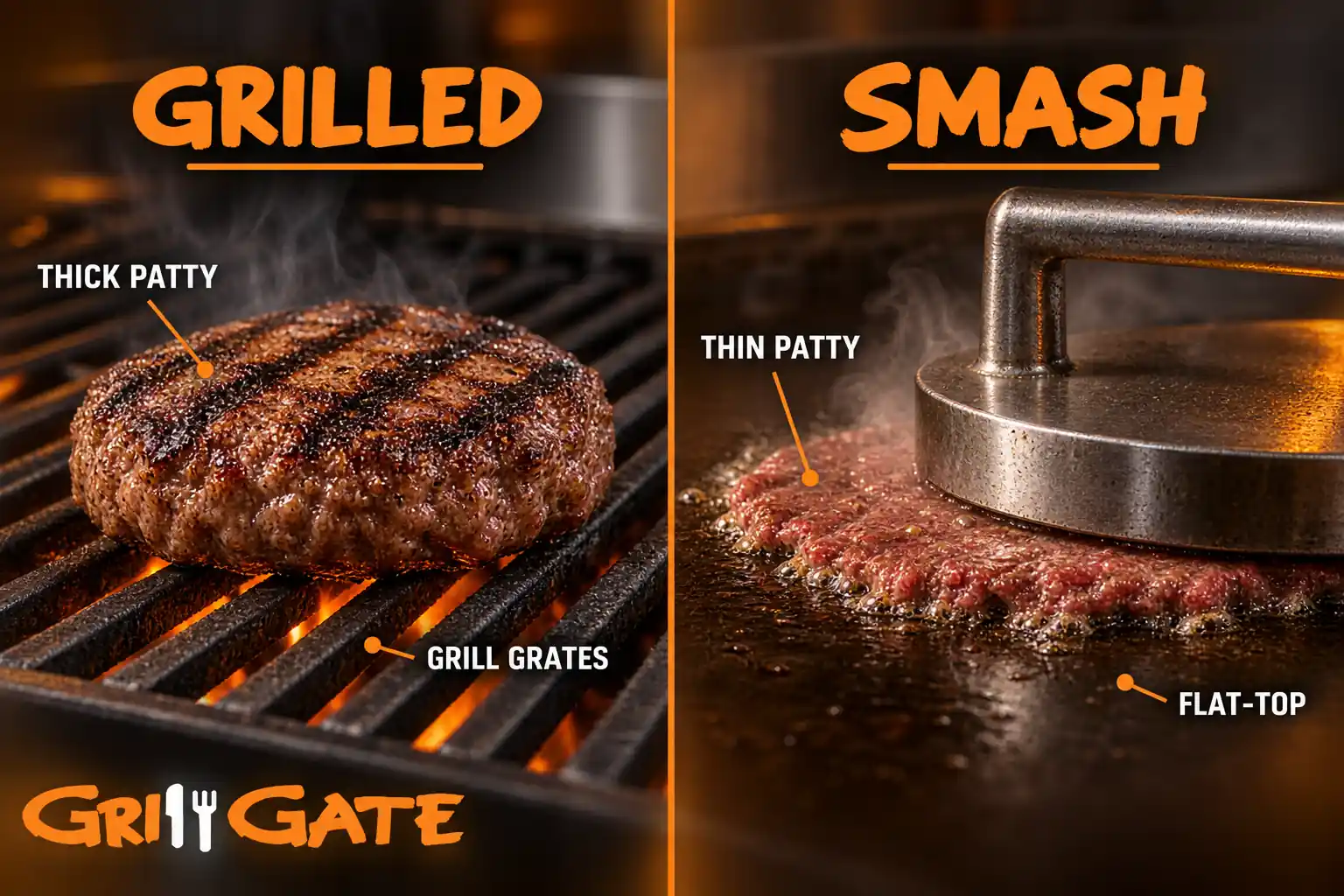
A conventional grilled patty sits on raised grill grates. Only parts of the beef touch the hot metal directly. Other areas cook through radiant heat and circulating hot air.
This produces distinctive grill marks, small charred areas and a thicker interior.
Smash burger cooking method
A smash burger requires a flat and very hot cooking surface. Once pressed, a large portion of the patty touches the heated surface at the same time.
That direct contact creates more even browning across the bottom of the patty. A thin metal spatula is then used to lift the crust from the surface before the burger is flipped.
A slotted outdoor grill is generally unsuitable for a true smash burger because the soft beef can be pushed between the grates. A flat griddle or cast-iron surface is more appropriate.
Why Does a Smash Burger Have More Crust?
The distinctive crust comes from intense surface browning. When a thin patty is pressed against a hot griddle, more beef makes direct contact with the heat.
This encourages the Maillard reaction, a heat-driven reaction involving amino acids and sugars in food. It produces many of the roasted and savoury aromas associated with browned meat.
More surface contact does not automatically guarantee a good result. If the cooking surface is not hot enough, the meat may steam in its own moisture instead of developing a strong crust. If the patty is pressed repeatedly after cooking begins, it may become dry.
A good smash burger depends on three elements:
- A sufficiently hot flat surface
- Firm pressure applied immediately
- Leaving the patty undisturbed long enough to brown
Which Burger Is Juicier?
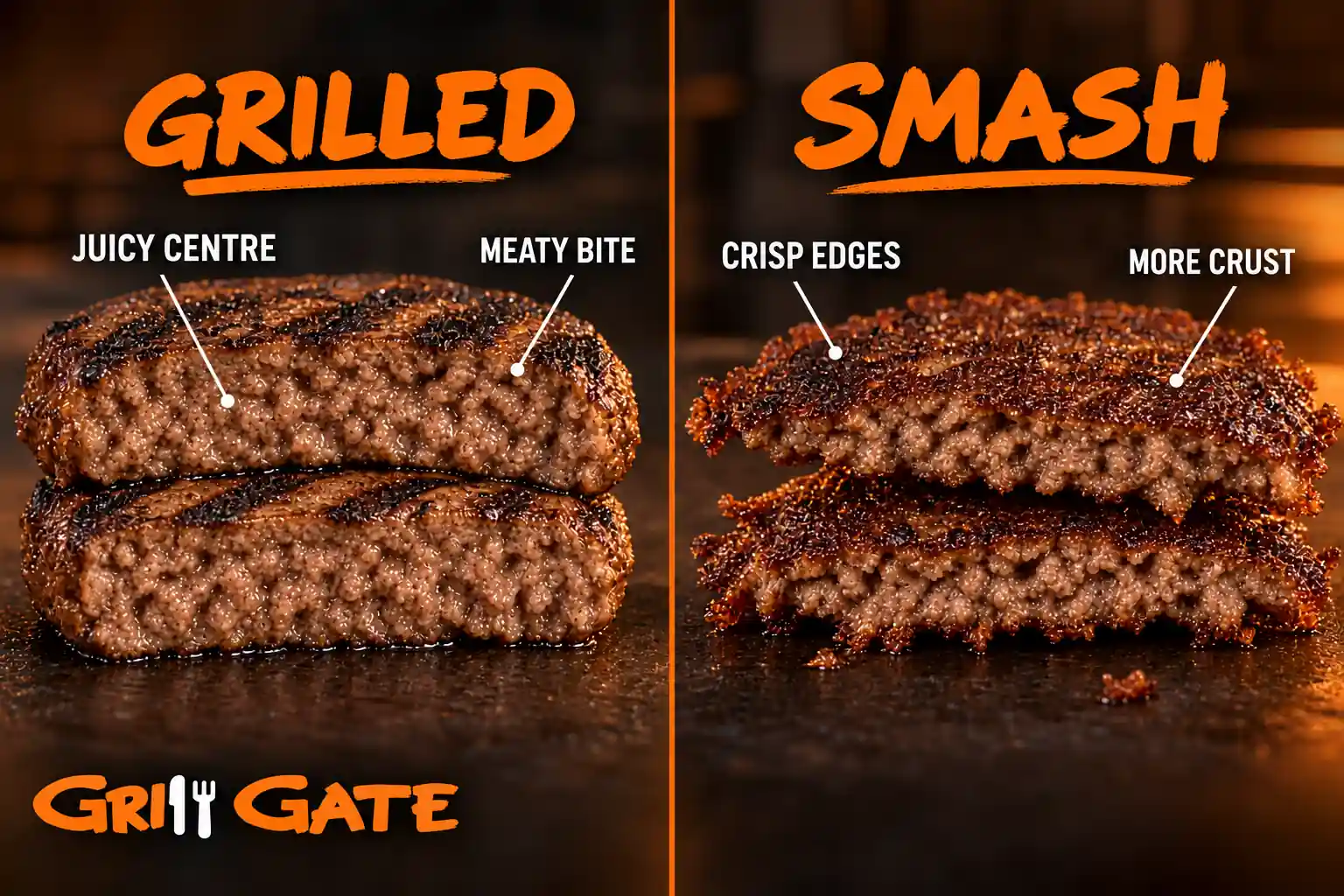
A thicker grilled burger generally provides a more noticeable juicy centre because there is more interior meat between the cooked surfaces.
A smash burger cannot offer the same thick, tender centre. Its appeal comes from the contrast between its browned surface, crisp edges, melted cheese and sauce. When properly prepared, it should still taste moist and rich rather than dry.
This means “juicy” can describe two different experiences:
- A grilled burger offers moisture within a thicker centre.
- A smash burger combines rendered fat, crust, cheese and sauce in a thinner bite.
If your priority is a substantial beef texture, choose grilled. If you prefer crispy edges and concentrated seared flavour, choose smash.
Does a Smash Burger Taste Better Than a Grilled Burger?
Neither cooking style is objectively better. They emphasize different flavours.
A grilled burger usually tastes meatier in the centre and may include lightly smoky or charred notes. Its thicker patty also gives the beef more presence relative to the cheese, sauce and vegetables.
A smash burger emphasizes browned flavour. Because each patty is thin, toppings and melted cheese become more noticeable in every bite. The crispy edges also create more textural contrast.
Your preference will depend on what you want from the burger:
| If you prefer… | Choose… |
|---|---|
| A thick, substantial beef patty | Grilled burger |
| Crispy edges | Smash burger |
| A juicy centre | Grilled burger |
| Deep, full-surface browning | Smash burger |
| One large patty | Grilled burger |
| Thin stacked patties | Smash burger |
| Beef-forward texture | Grilled burger |
| More cheese and crust in each bite | Smash burger |
Is a Smash Burger the Same as a Regular Burger?
A smash burger is still a burger, but it is not simply a regular patty pressed down at any point during cooking.
The meat is intentionally kept loose, placed on a flat cooking surface and smashed immediately. A regular grilled burger is shaped before cooking and should normally keep its form throughout the process.
This distinction matters because the methods aim for different results. Grilling protects the thicker centre, while smashing maximizes contact with the hot surface.
Are Smash Burgers Always Smaller?
Smash burger patties are usually thinner, but that does not necessarily mean the finished burger contains less beef.
A restaurant may serve two or more thin patties in one burger. A double smash burger can therefore contain as much meat as a thicker single-patty burger, depending on the patty weights.
Thickness, number of patties, cheese, sauce and toppings all affect the final size of the meal. The term “smash burger” describes the cooking technique rather than a fixed serving size.
Is One Style Healthier?
The cooking method alone does not determine which burger is healthier.
A single smash patty may be smaller than a thick grilled patty, but smash burgers are frequently stacked and served with multiple cheese slices. A grilled burger may contain more beef in one patty but use fewer layers.
The final nutritional profile depends on:
- Total amount of beef
- Number of patties
- Fat content of the meat
- Type and amount of cheese
- Sauces
- Bun size
- Additional toppings
- Side dishes and drinks
Comparing the full order is more useful than judging the burger only by whether it was grilled or smashed.
Which Burger Is Better for Toppings?
A thick grilled burger can support substantial toppings without allowing them to completely overpower the meat. Mushrooms, grilled peppers, guacamole, eggs and bold sauces work particularly well with a larger patty.
Smash burgers usually perform best with a simpler build. Cheese, pickles, grilled onions and burger sauce complement the thin crispy patties without hiding their browned edges.
This is not a strict rule, but it provides a useful starting point:
- Choose a grilled burger for larger or more varied toppings.
- Choose a smash burger for a compact, cheese-forward build.
Which Burger Should You Choose?
Choose a grilled burger if you want the beef patty to be the most substantial part of the meal. It is particularly suitable when you enjoy a thicker bite, a juicy centre or generous gourmet toppings.
Choose a smash burger if your priority is crust. The thin patties deliver crispy edges, deep browning and an even combination of beef, cheese and sauce in each bite.
If you are ordering for the first time, use this simple rule:
Choose grilled for thickness and a meaty centre. Choose smash for crust and crispy edges.
A Food-Safety Note for Beef Burgers
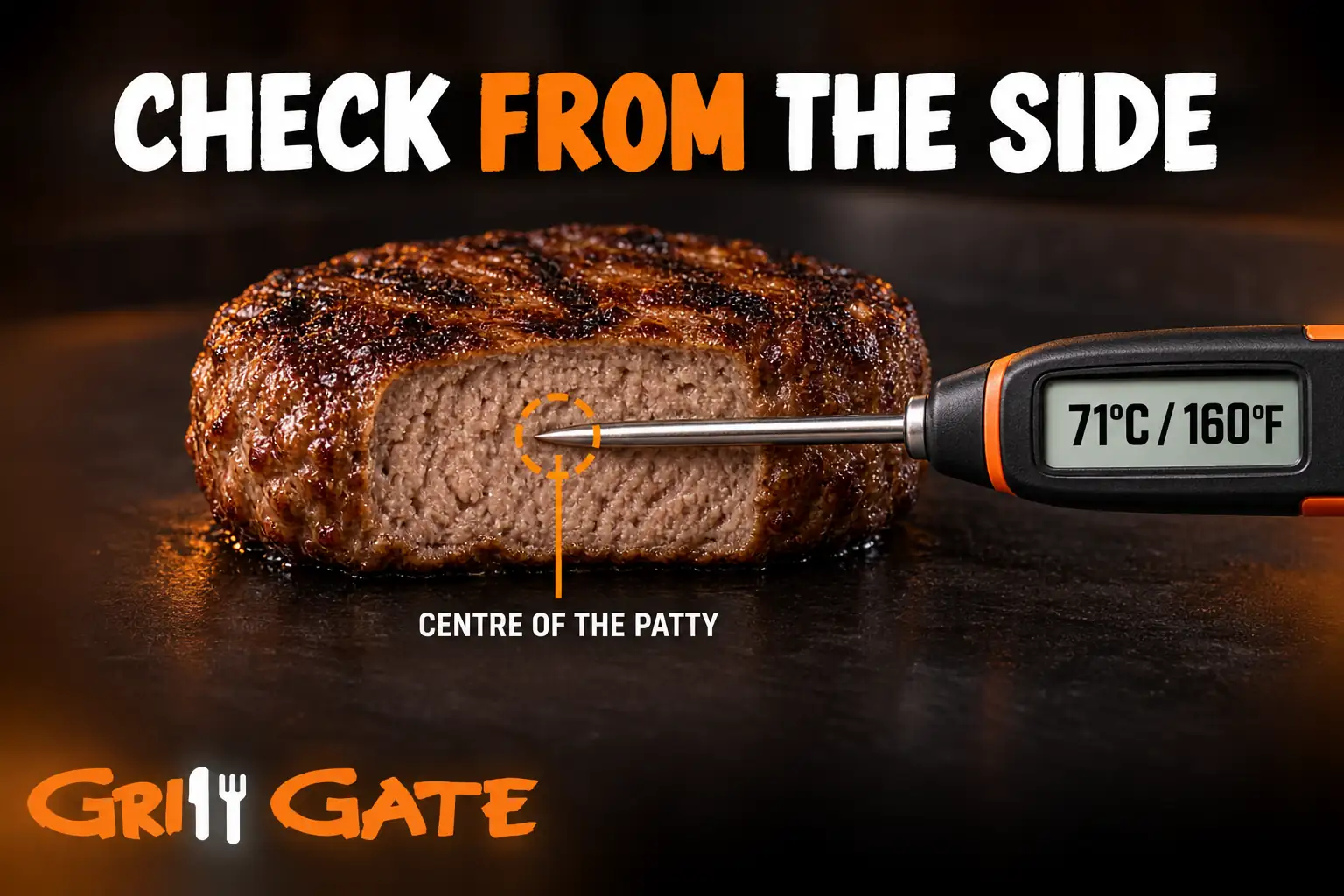
Ground beef should be cooked according to safe internal-temperature guidance, regardless of whether the patty is grilled or smashed.
Health Canada’s safe cooking temperature guide lists 71°C (160°F) as the safe internal temperature for ground beef, including burgers. It also advises: “For burgers, insert food thermometer through the side of the patty.”
This is especially useful for thicker patties because exterior browning does not confirm that the centre has reached a safe temperature.
Looking for a Substantial Burger at Grill Gate?
The current Grill Gate menu features a selection of burgers made with substantial 8 oz beef patties. This style is a good match for diners who prefer a filling, beef-forward burger rather than an ultra-thin smash patty.
Options include:
- Gourmet Cheeseburger
- Classic Cheese Burger
- Spicy Cheeseburger
- Mushroom Cheeseburger
- Guacamole Cheeseburger
- Big Deal Burger
- Basil Pesto Burger
- Double Patty Cheeseburger
Because the toppings differ significantly, you can choose between a classic build or flavours such as mushroom, grilled pepper, guacamole and pesto.
You can explore Grill Gate locations in Richmond Hill, North York on Sheppard Avenue West, North York near Yonge Street and Aurora.
Final Verdict: Grilled Burger or Smash Burger?
The main difference between a grilled burger and a smash burger is the relationship between thickness and surface browning.
A grilled burger keeps a thicker shape, creating a substantial texture and juicy centre. A smash burger is pressed thin against a flat cooking surface, producing more crust and crispy edges.
Neither style wins in every situation. Choose a grilled burger when you want a thick, meaty bite. Choose a smash burger when you want intense browning and a crispier texture.
Frequently Asked Questions
What is the main difference between a grilled burger and a smash burger?
A grilled burger uses a pre-shaped, usually thicker patty that keeps its form while cooking. A smash burger begins as a ball of beef that is pressed thin on a hot flat surface to create a browned crust and crispy edges.
Is a smash burger grilled?
A smash burger may be cooked on equipment commonly called a grill, but it requires a solid flat surface rather than open grill grates. A flat-top griddle or heavy skillet allows the entire patty to make contact with the heat.
Why are smash burgers crispy?
Smashing increases the amount of meat touching the hot surface. The larger contact area creates more browning and produces the thin, crisp edges associated with smash burgers.
Should you press down on a grilled burger?
A conventional grilled burger should not be repeatedly pressed during cooking. A smash burger is pressed once, immediately after being placed on the hot surface. Pressing a thicker burger later can force out moisture and rendered fat.
Can a smash burger still be juicy?
Yes. A properly cooked smash burger can remain moist and rich, especially when served with melted cheese and sauce. However, it will not have the same thick, juicy centre as a larger grilled patty.
Which is better, a grilled burger or a smash burger?
Choose a grilled burger for a thick patty, substantial beef texture and juicy centre. Choose a smash burger for crispy edges, deep browning and a higher crust-to-meat ratio.